I’ll admit it: back in 2024 when Marvel Rivals launched, I experimented with the infamous “zero damage Rocket” build. You’d just spam healing orbs, hug a wall, and pretend you were a mobile health pack. It felt like playing the game with one hand tied behind your back—except the ropes were made of good intentions that still somehow caused half your team to rage quit. Fast forward to 2026, and the pendulum has swung. Now we’re seeing “zero healing Rocket” players who focus only on DPS, treating the furry Guardian like a tiny, trigger-happy shredder. This extreme flip-flopping feels less like a strategy and more like licking a frozen flagpole just to see what happens—interesting once, but ultimately painful for everyone involved.
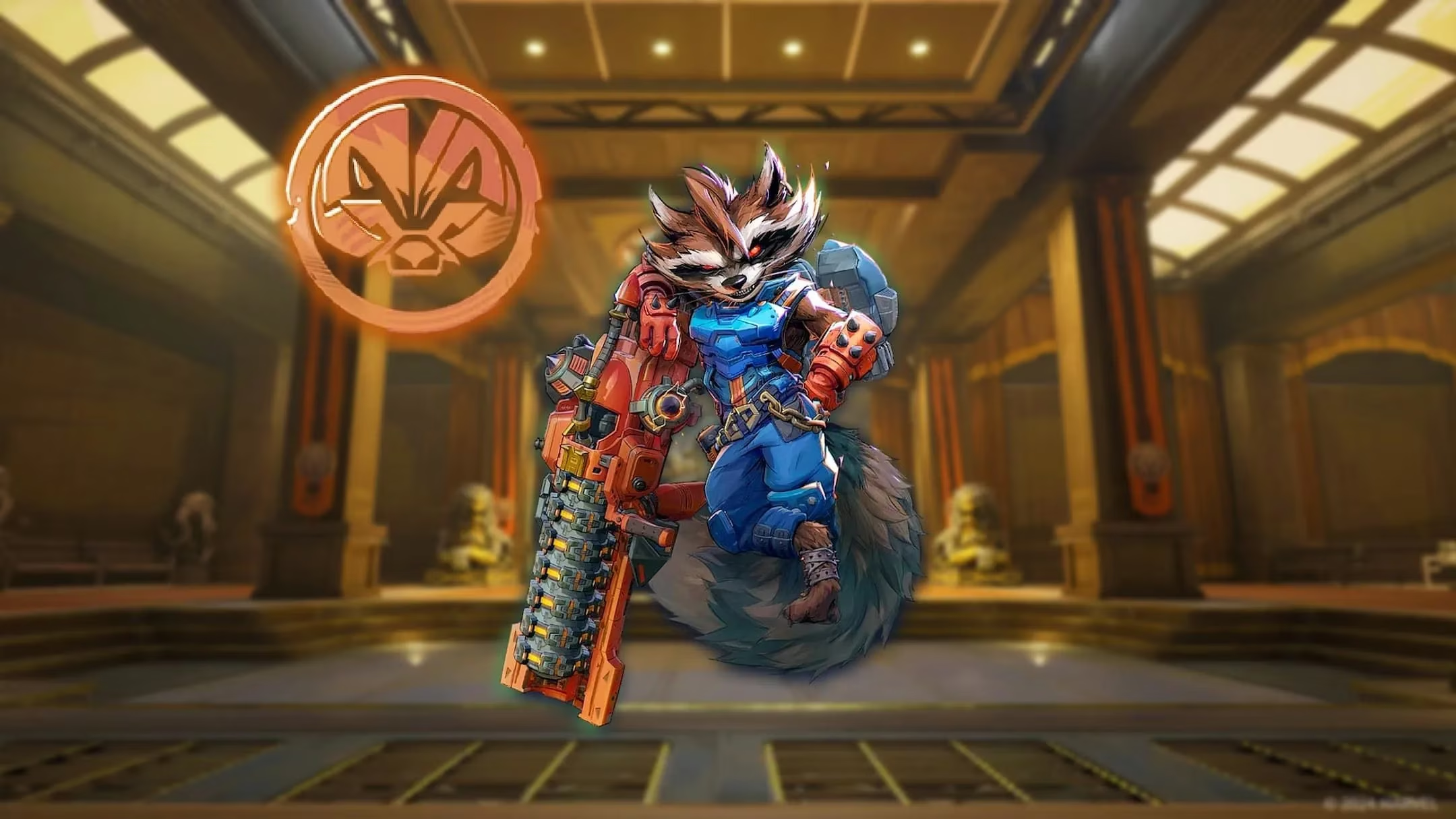
Don’t get me wrong: Rocket Raccoon can absolutely melt tanks. His main attack, when aimed consistently, chews through health bars like termites through a pinewood derby car. A few months ago, I watched a Rocket player solo-delete an overextended Venom faster than I could ping “need healing.” That kind of burst potential is why I keep coming back to the character. But the recent Reddit post that sparked this whole debate—showing a Rocket with massive damage and zero healing—feels like a cautionary tale. It’s the equivalent of a chef who owns a full set of knives but insists on slicing every ingredient with a spoon just to prove a point. Yes, you can do it, but the meal is going to taste like regret and lost ELO.
The real problem isn’t that people try off-meta approaches. It’s that these “challenge runs” give Rocket a reputation he doesn’t deserve. I’ve been in lobbies where someone locks in Rocket and immediately hears “please don’t throw.” That stings because Rocket’s kit is a symphony, and deliberately ignoring a whole movement—like playing a concerto while refusing to touch the violin’s G string—turns what should be a masterpiece into a confusing noise. His revival beacon alone can swing team fights, and his mobility lets him peel for the backline in ways other Strategists can only dream of. When you opt to ignore half of that toolkit, you aren’t just making a personal style choice; you’re effectively telling your teammates that their rank experience matters less than your YouTube highlight reel.
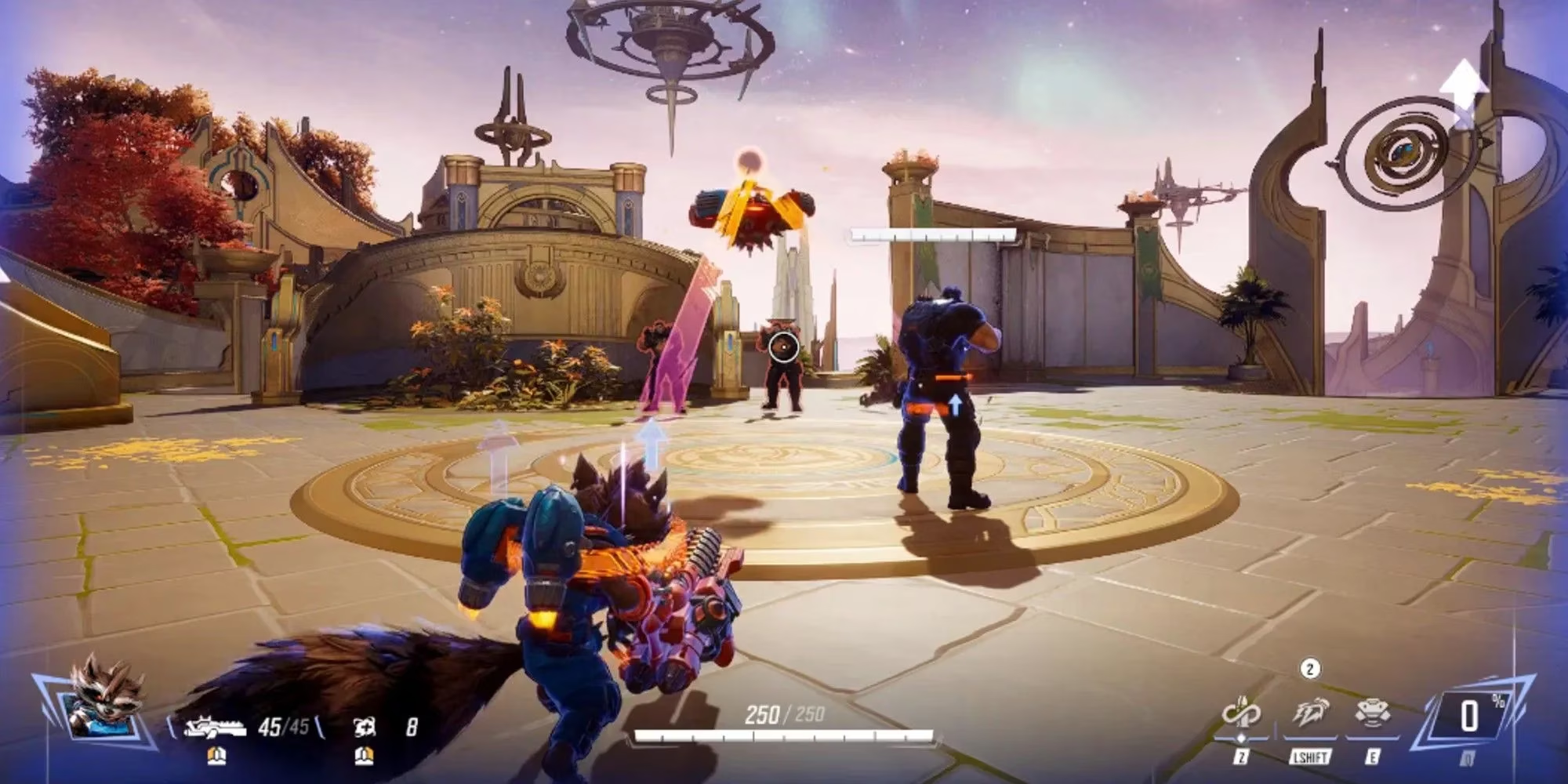
By 2026, the Marvel Rivals meta has evolved past rigid 2-2-2 formations, but one principle has become clearer than ever: hero mastery means knowing when to heal and when to damage. The game’s in-game ability descriptions still aren’t perfect—I recently discovered that Captain America’s ultimate leaves a trail that grants bonus health to allies, something the tooltip glosses over. If a Cap main doesn’t know that, they waste a game-changing ult by sprinting solo into the enemy backline. It’s a prime example of why intentional ignorance of a hero’s full kit is effectively self-sabotage. Imagine an F1 driver who decides to never shift beyond second gear because “the engine sounds cooler that way.” You might put on a show, but you’ll never finish the race.
The community sentiment echoes this. Plenty of players now argue that deliberately ignoring healing, damage, or revives with Rocket should be considered throwing, and honestly, after two years of seeing matches derailed by meme playstyles, I agree. It’s okay to prioritize DPS sometimes—especially if your co-support is pumping out heals and you spot a tank out of position—but refusing to heal at all is like a firefighter showing up to a five-alarm blaze armed only with a water pistol and a witty catchphrase.
So here’s my plea for 2026: let’s retire the zero-anything Rocket challenges. Use the whole toolkit. You’ll still shred tanks, you’ll still enable your team, and you won’t have to dodge the wrath of five flaming teammates every match. Rocket Raccoon isn’t a one-note character, and treating him like one is a disservice to one of the most versatile heroes in the game. After all, you wouldn’t eat soup with a fork—why play a Strategist like you’ve forgotten how the menu works?