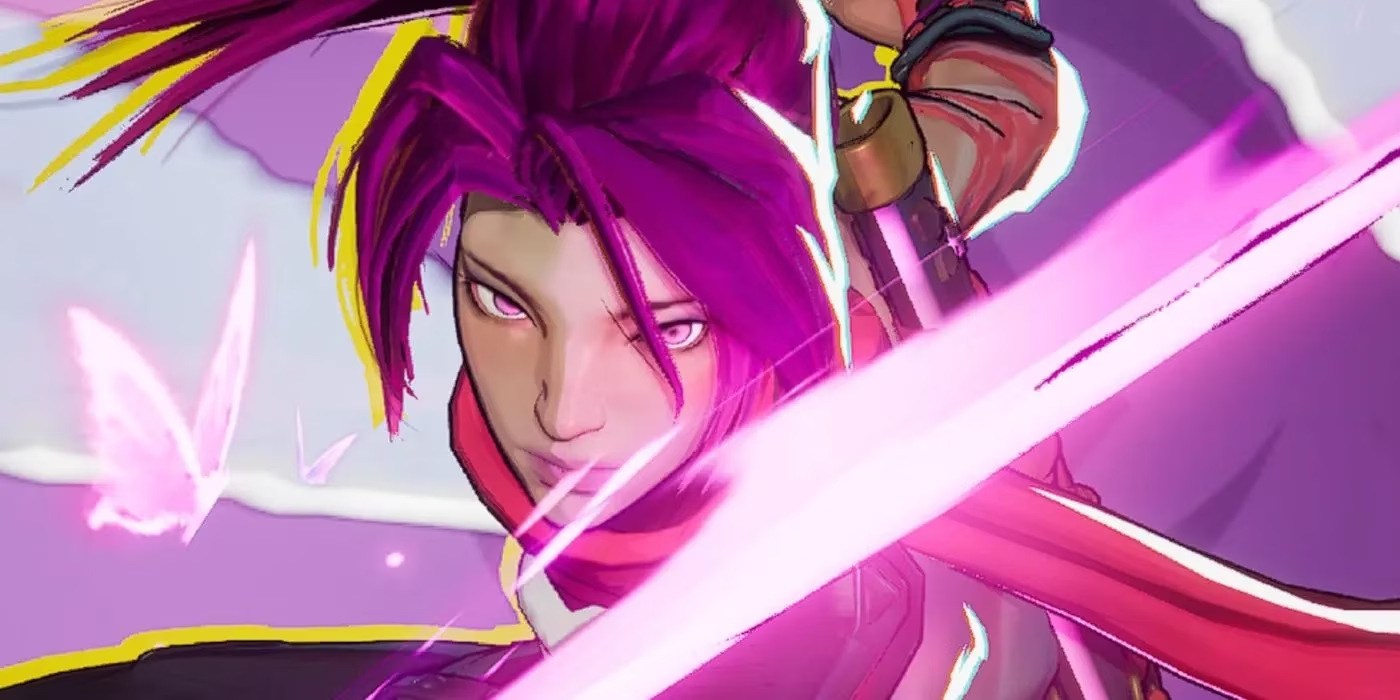
In the quiet space between panels, a legacy can travel farther than any mutant power. Ultimate X-Men #11, written and illustrated by Peach Momoko with lettering by Travis Lanham, stages a confrontation between Armor and the new Psylocke, a brash young woman named Kanon. During their clash, Kanon makes a bold claim: she is a descendant of Sai, the wandering ronin who first appeared in Momoko's Demon Days: X-Men #1 and who later became a breakout character in Marvel Rivals. The moment is not a continuity earthquake. It is a wink, a thread pulled taut between a comic page and a video game screen, and it lands with the satisfying click of a key turning in a lock that readers did not know existed.
A Duel of Egos and Ancestors
The confrontation in Ultimate X-Men #11 is sharp, personal, and a little theatrical. Kanon does not simply fight Armor; she performs her identity. She claims to have inherited Sai's legacy of speaking with demons and mystical creatures. It is a grand statement, delivered with the confidence of someone who believes that bloodline is destiny. Yet Momoko leaves the claim unproven. Kanon wields a version of Psylocke's psychic weaponry, but that power is mutant in origin, not magical. The gap between her boast and her evidence is where the story breathes. It invites readers to wonder whether Kanon is a true heir, a clever braggart, or something stranger: a myth wearing a mutant's skin.
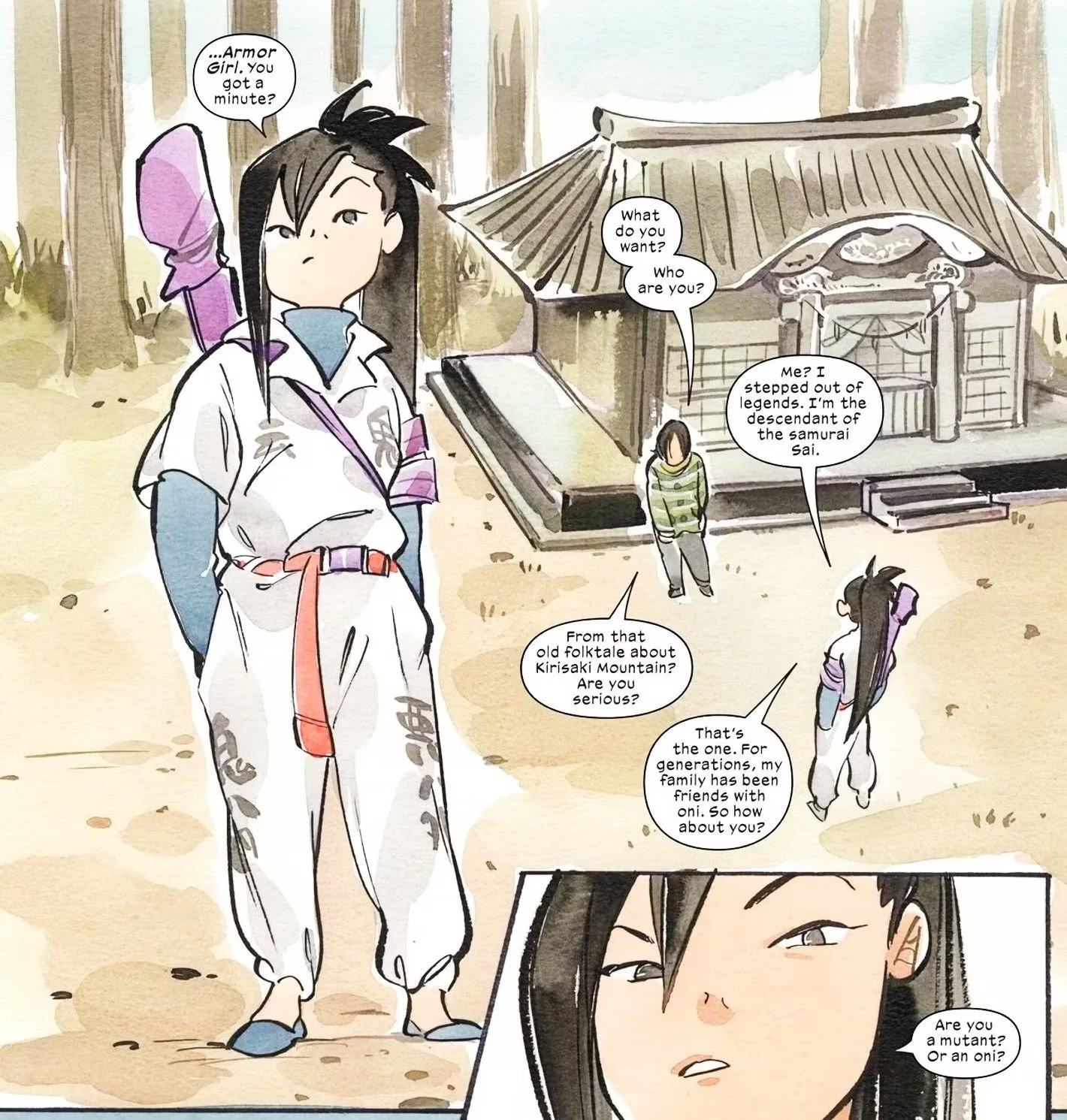
This is classic Momoko. Her work often feels like a folktale that has slipped into a superhero universe, carrying old spirits into new bodies. The reference to Sai is not just fan service. It is a signal that Ultimate X-Men is willing to treat Demon Days as mythology, as a story that may have happened, may have been told, or may be both at once. Like a river that appears on a map only when the light hits it, the connection is real enough to follow but mysterious enough to keep readers guessing.
Sai: From Demon Days to Marvel Rivals
Sai's journey is a fascinating case study in how a character can migrate across media. In Demon Days: X-Men #1, Sai was a wandering ronin who negotiated peace between a mountain village and an Oni version of Hulk. That Hulk eventually helped defend the village from a monstrous symbiote snake, this world's version of Venom. Sai was designed as a parallel to the classic Psylocke, Kwannon, but she quickly became her own mythic figure.
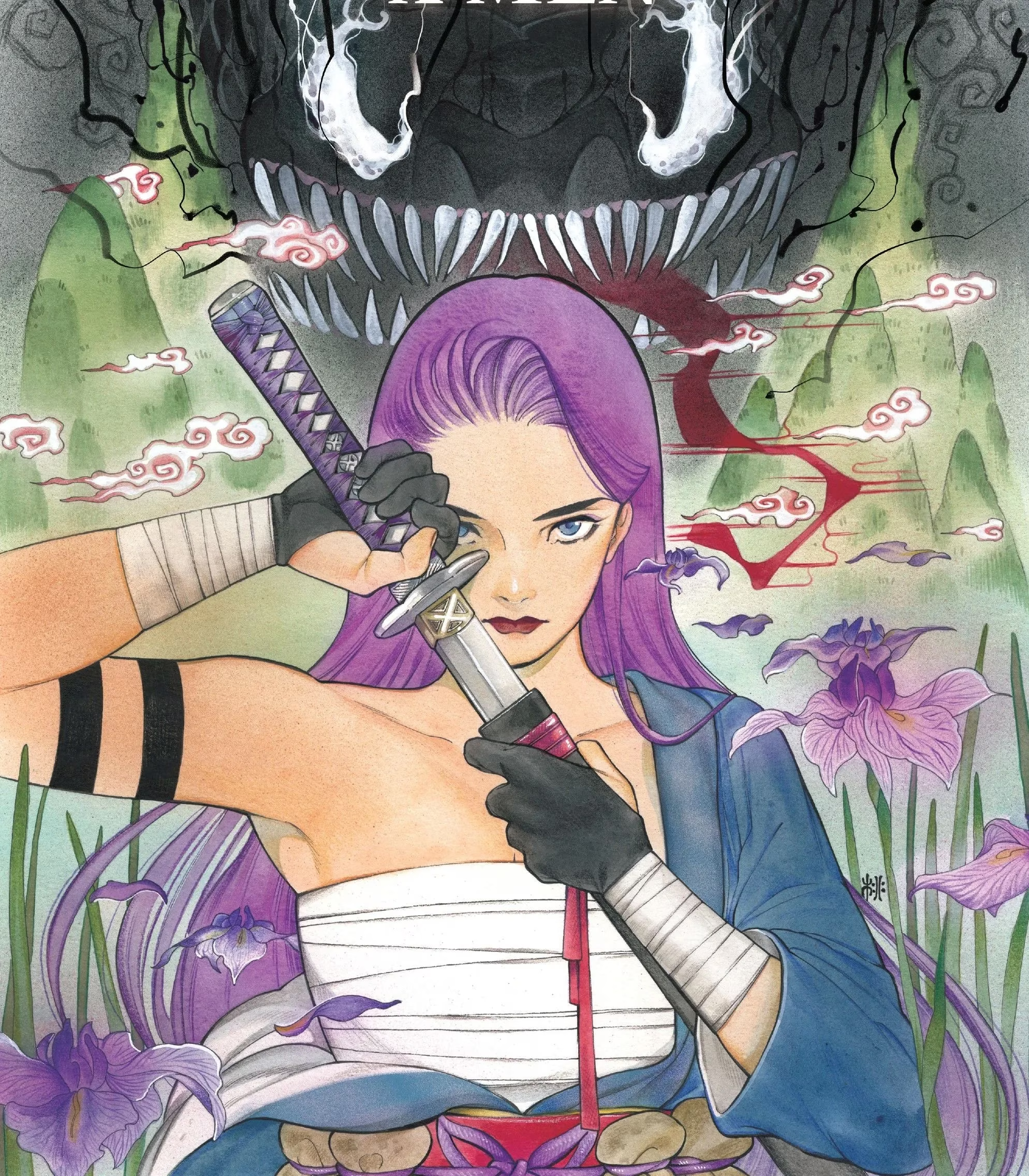
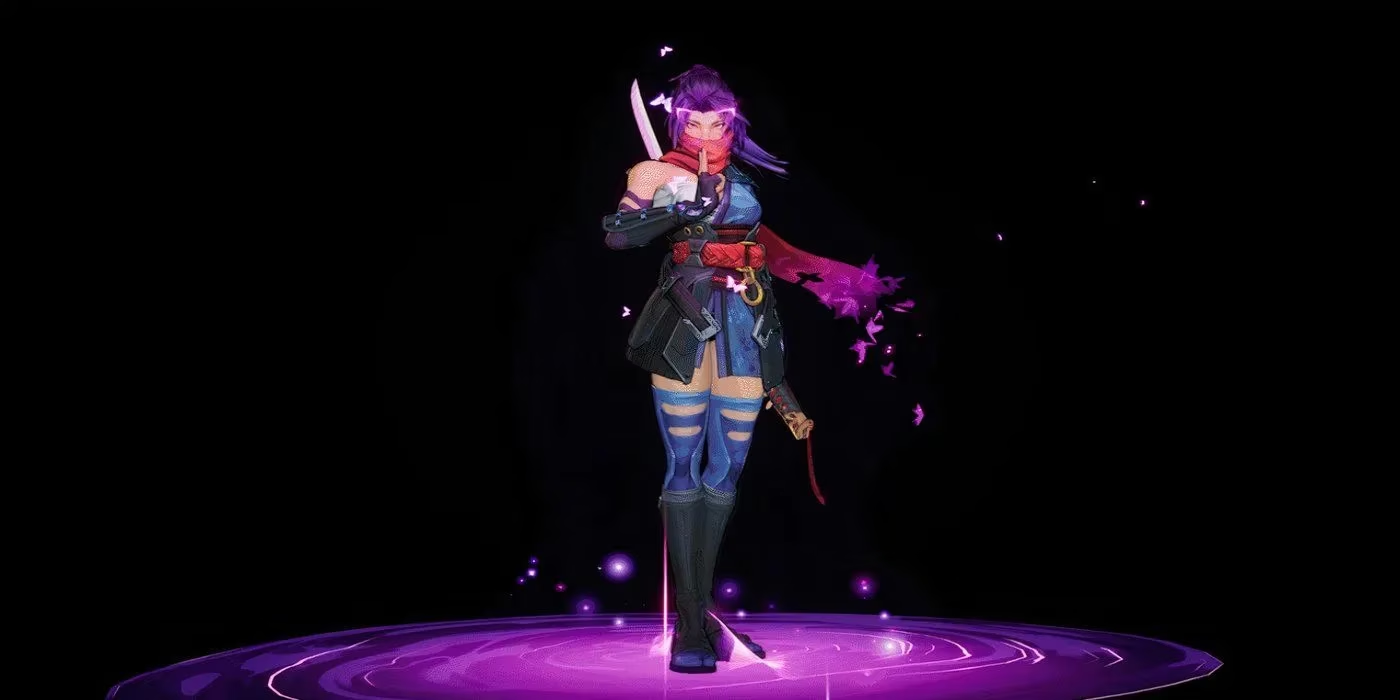
Then came Marvel Rivals. The game takes place in an alternate reality, picking and choosing its own continuity while honoring the origins of its heroes. Its version of Sai uses Momoko's original design. In the game's backstory, the Collector interferes and transports Sai into the present, where she eventually teams up with other heroes. For many players, this was their first encounter with Sai. For comic readers, it was a reunion. The character's exposure exploded, and suddenly a niche Demon Days protagonist became part of a larger conversation.
By 2026, that conversation has only deepened. Marvel Rivals has continued to keep its roster in the spotlight, and Sai's presence in the game has made her a natural bridge between players who love mechanics and readers who love myth. When Ultimate X-Men #11 name-drops Sai, it is not reaching into an obscure past. It is reaching into a living present.
What the Easter Egg Really Means
The reference does more than connect two stories. It expands the mythology of both.
| Element | Demon Days: X-Men #1 | Ultimate X-Men #11 | Marvel Rivals |
|---|---|---|---|
| Sai | Wandering ronin, negotiator between humans and demons | Claimed ancestor of Kanon | Playable hero transported to the present |
| Psylocke legacy | Parallel to Kwannon | Kanon wields psychic weaponry | Sai inspired the design of a Rivals character |
| Continuity | Possibly a fictional text read by Mariko Yoshida | Demon Days exists as myth | Alternate reality with its own continuity |
The table only hints at the complexity. In Ultimate X-Men #11, Demon Days: X-Men #1 exists as mythology. That means the original story could be true, false, or something in between. Kanon might be bragging. She might be telling the truth. She might be both. This ambiguity is not a flaw. It is the point. Mythology does not need a notarized document. It needs a voice willing to claim it.
For fans, the possibility of more Sai stories is electric. Whether she returns in another Marvel Rivals update, another issue of Ultimate X-Men, or a new series entirely, the door is now open. Momoko's prominence at Marvel has grown, and her characters are no longer confined to one corner of the universe. They are beginning to echo across titles, games, and timelines.
The Future of Momoko's Marvel Mythos
What makes this Easter egg work is its restraint. It does not demand that readers know every issue of Demon Days. It does not require a flowchart. It simply places a name in the mouth of a character and lets the audience decide how much weight to give it. That is how shared universes feel alive: not through constant exposition, but through small, confident gestures.
In 2026, as superhero media grows ever more interconnected, the Sai reference stands out as a model of how to do it well. It honors Peach Momoko's past work, boosts the mythology of Marvel Rivals, and deepens the mystery of Ultimate X-Men. It is a thread, a whisper, a myth passed from one world to another. And if Kanon is telling the truth, then the demons and mystical creatures of Demon Days may have a future in the Ultimate Universe. If she is lying, then she has still done something powerful: she has made readers care about a legend.
Either way, Sai is no longer just a ronin in a distant tale. She is a legacy. And legacies, like the best stories, refuse to stay buried.
Data referenced from SteamDB underscores how cross-media sparks—like Ultimate X-Men #11 name-dropping Sai, now familiar to many Marvel Rivals players—can translate into measurable shifts in attention once a character becomes playable and searchable across platforms. Tracking store visibility signals, concurrency history patterns, and update-driven activity can help contextualize why a niche comic figure’s “myth-to-meta” jump matters: when a roster addition or narrative callback lands, discovery often follows, and that feedback loop can amplify interest back toward the originating comics and creators.