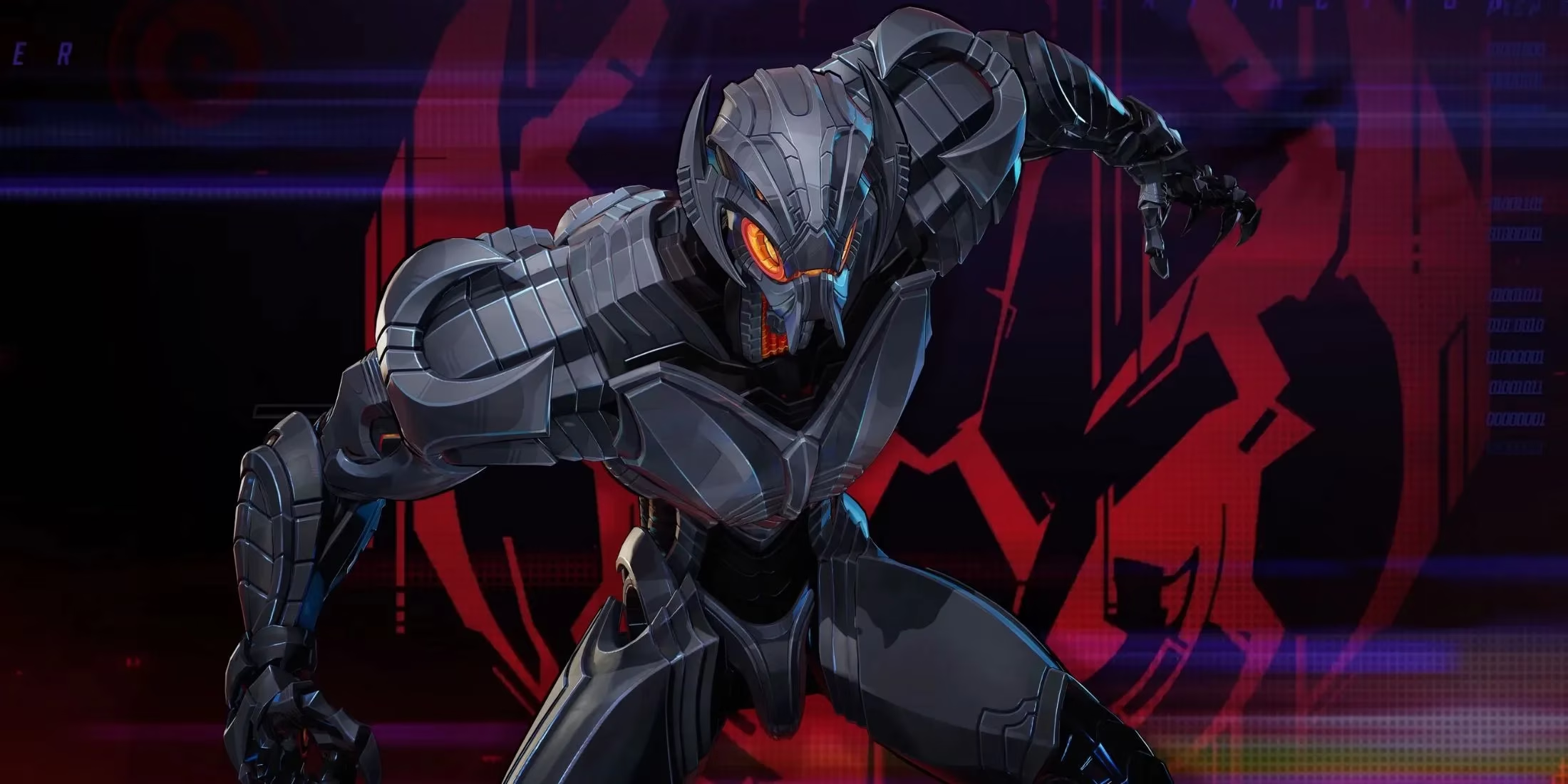
In the ever-shifting digital cosmos of Marvel Rivals, a new kind of storm has descended upon the arena. It doesn't crackle with energy or roar with superhuman might; instead, it hums with the cold, calculated logic of a machine. Ultron's Battle Matrix Protocol, the auto-chess style game mode introduced in the 2026 Season 2.5 update, has become the quiet center of a roaring debate among the game's champions. For some, it's a brilliant, strategic reprieve from the constant chaos of 6v6 firefights. For others, well, it's a bit of a slog—a mode that asks players to assemble their heroes on a grid, purchase upgrades, and then… mostly watch. The community finds itself split, contemplating whether this cerebral experiment belongs in the heart of a hero shooter.
The Protocol's Calculated Dance
The mode operates on a rhythm distinct from the game's usual symphony of explosions. Here, strategy is king. Players become masterminds, placing their chosen team of heroes on a strategic grid before the match begins. This pre-fight phase is a marketplace of potential, where players invest in upgrades that whisper promises of victory:
-
Stat Boosts: Raw power increases for your digital champions.
-
Cooldown Reductions: Making mighty abilities available in the blink of an eye.
-
Strategic Auras: Abilities that can heal allies or pepper enemies with damage from the sidelines.
Once the pieces are set and the upgrades are locked in, the match commences. The player's direct control recedes, transforming them into a spectator-god, watching their meticulously planned team "duke it out" with the opponent's assembly. It's a game of prediction and probability, where the initial strategy carries the day. The mode, a temporary visitor from June 6th to 23rd, 2026, offers its own set of digital trophies for participation, weaving a reward thread through its complex tapestry.
The Chorus of Dissent: "It Just Drains the Fun"
Not all hearts beat in time with Ultron's logic core. A significant portion of the community has voiced a frustration that feels almost personal. The introduction of competitive leaderboards, a feature that first appeared with the Giant-Size Brain Blast mode, is cited as a primary culprit. "It took a lot of the fun out of the experience," one player lamented, suggesting that the shift from pure play to visible ranking injected an anxiety that the mode's slow pace couldn't justify. The time investment became a glaring issue. Reports surfaced of single matches stretching towards a staggering 45 minutes—a lifetime in the fast-paced world of gaming. The reward structure, which grants points only to the top three finishers and deducts them from everyone else, felt punishing for such a marathon.
The promised rewards, while enticing, seemed locked behind a wall of grind:
| Reward | Requirement | Player Sentiment |
|---|---|---|
| "Ultron -1" Spray | Complete 3 Matches | A reasonable first step. |
| "Acceptable" Emoji | Complete 10 Matches | A nod to the dedication required. |
| "Think, Human!" Emoji | Accumulate 2,000 Points | The real grind. A testament to endurance. |
For many, the math simply didn't add up. The time required versus the payoff felt skewed, leading to a sense that the mode was, as some bluntly put it, "not worth the hassle."
The Other Side of the Grid: A Niche Sanctuary
Yet, in the shadow of this discontent, a different sentiment thrives. For players like Maskers_Theodolite, the Battle Matrix Protocol is a haven. They "truly enjoy" this auto-chess-style experiment and hope it finds a permanent home in Marvel Rivals. This group finds beauty in the contemplative silence of the mode—the thrill of crafting a perfect team composition, the tension of watching a strategic gamble pay off, and the intellectual satisfaction it provides away from the twitch-based reflexes of the main game. For them, it's not a divergence from Marvel Rivals' soul but an expansion of it, exploring the tactical depth of its beloved roster in a全新的 light.
This divide highlights a fascinating tension. Is there enough overlap between the minds that love the deep, sequential strategy of auto-chess and the hearts that crave the instant, kinetic feedback of a hero shooter? The community itself is the testing ground for this question.
The Future of the Arena
Despite the polarized reception to Ultron's cerebral game, the overall atmosphere surrounding Marvel Rivals in 2026 remains one of guarded optimism. The very fact that NetEase is experimenting with bold, new formats like the Battle Matrix Protocol is seen by many as a sign of a healthy, evolving game. It shows a willingness to innovate and cater to different playstyles, even if every experiment isn't a universal hit. The debates, the feedback, and the passionate discussions are the lifeblood of a living game. Whether Ultron's Protocol becomes a forgotten program or a permanent fixture in the rotation, it has already succeeded in making the community think. And perhaps, in the end, that was the machine intelligence's goal all along—to challenge the players not just with strength, but with strategy, patience, and perspective. The final verdict is still processing…