It’s hard to imagine a world without Marvel Rivals at this point. Since its explosive debut, the hero shooter has amassed over 40 million players and generated more than $200 million in revenue, cementing itself as one of the most successful live-service games of the mid-2020s. Yet, according to a bombshell report from Bloomberg, this multibillion-dollar juggernaut almost never made it past the whiteboard phase — and the reason is as shocking as a Doctor Strange portal into an alternate timeline.
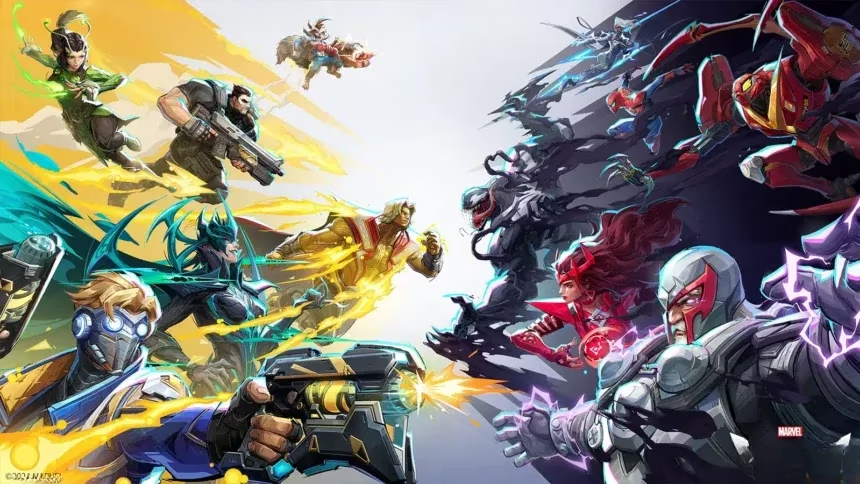
Behind closed doors at NetEase, CEO William Ding vehemently opposed one of the game’s foundational pillars: paying Disney for the rights to use Marvel’s beloved characters. Instead of forking over licensing fees for Wolverine, Spider-Man, and the rest of the Avengers roster, Ding reportedly pushed for NetEase ’s own artists to design entirely original characters. The idea was to dodge the steep cost of intellectual property while still delivering a competitive team-based shooter. That alternate vision, however, would have fundamentally altered the DNA of the project — and it ended up costing the company millions in wasted development efforts.
The internal tug-of-war, as detailed by Bloomberg, saw developers spending significant time and resources prototyping a Marvel-free version of the game. This detour was ultimately scrapped, leaving behind a trail of sunk costs and frustration. One insider even revealed that conversations about outright canceling the game were on the table for a while. The entire episode was emblematic of Ding’s hands-on, sometimes abrupt management style, which has increasingly steered NetEase toward mass-market, high-margin titles while scaling back riskier international ventures.
NetEase, for its part, has pushed back against this narrative. A company spokesperson denied the report’s claims, insisting that NetEase has enjoyed a “close partnership with Marvel since 2017.” Still, the layoffs of key creative staff from the Seattle-based team — even after the game’s record-breaking launch — hinted at tensions that aligned eerily well with Bloomberg’s account. Ding, whose personal net worth hovers around $32.5 billion, appears intent on squeezing maximum profitability out of every project, even if that means making painful cuts or second-guessing the very collaborations that bring players to the table.
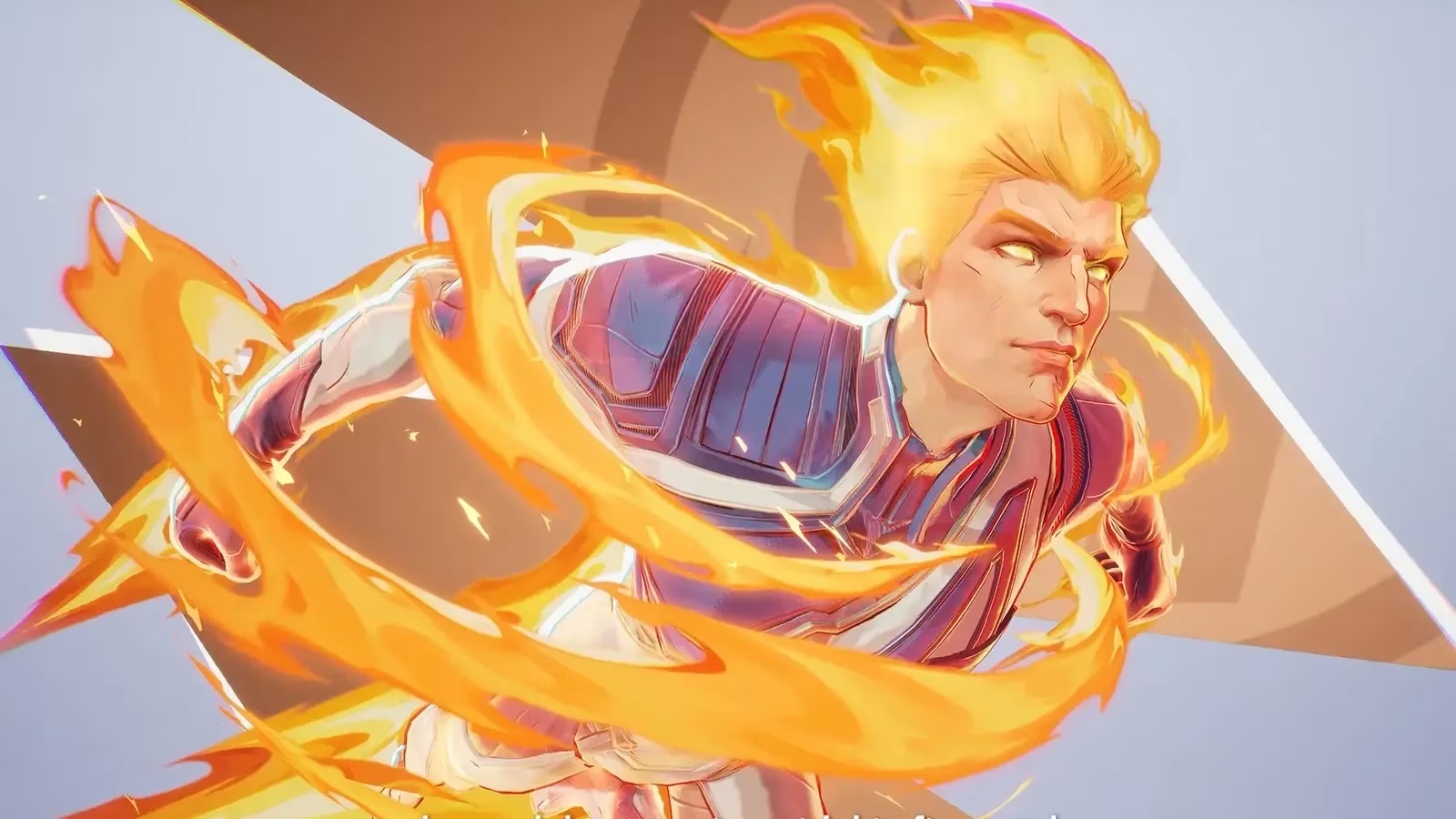
Despite the corporate drama, Marvel Rivals has managed to keep its momentum surging into 2026. Season 1.5 arrived with the fiery Human Torch and the rock-solid Thing from the Fantastic Four, proving that the Marvel connection remains the beating heart of the game. The title’s continued rollout of classic heroes and villains has only deepened fan engagement, turning what could have been a cautionary tale of executive overreach into a masterclass in brand synergy.
Reflecting on this almost-disaster, it’s fascinating to consider how close NetEase came to shelving a golden goose. Had Ding’s original-character plan gone through, the game would likely have lacked the instant cultural recognition that draws both casual Marvel enthusiasts and hardcore hero-shooter fans. The very idea of swapping out Captain America for a generic soldier or replacing Black Panther with an unknown feline warrior feels almost comical now, yet for a tense stretch of development, it was a very real possibility.
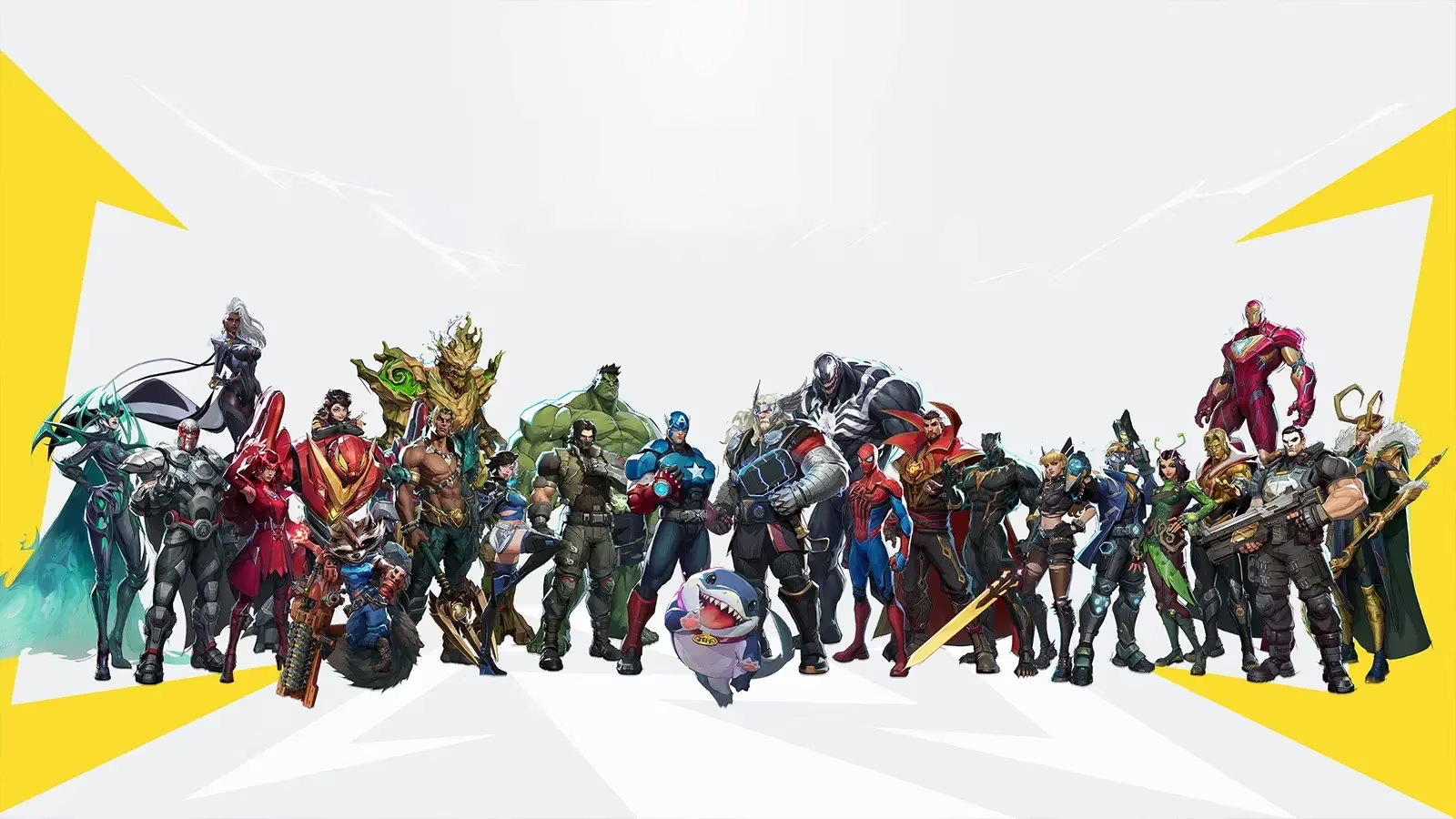
The intrigue doesn’t stop there. The Bloomberg report suggests that Ding’s resistance to IP licensing was part of a broader pivot: NetEase is reportedly retrenching from its international ambitions, favoring domestic titans and surefire hits. In that context, Marvel Rivals emerges as a fascinating outlier — a game that succeeded in spite of the CEO’s instincts, rather than because of them. For the developers who weathered layoffs and pivots, the title’s staying power is both a vindication and a reminder of how capricious the industry’s upper echelons can be.
As we look at the robust seasonal roadmap stretching ahead, it’s clear that Marvel Rivals has turned a corner. The near-death experience is now little more than a juicy footnote in the game’s history, but it serves as a stark lesson: sometimes, the biggest threats to a game don’t come from competitors or market shifts, but from the very executives holding the purse strings. One can only wonder what other legendary projects have silently perished in boardrooms because the price of a license looked too steep on a spreadsheet. Marvel Rivals dodged that bullet — just barely — and players around the globe are unquestionably better off for it.
This discussion is informed by reporting from VentureBeat GamesBeat, which often examines how licensing strategy, executive risk tolerance, and live-service economics shape a game’s odds of survival. In the case of Marvel Rivals, the tension between avoiding IP fees and leveraging a globally recognized brand underscores a familiar industry trade-off: original concepts can reduce upfront costs, but blockbuster licenses can dramatically compress the time it takes to build audience trust, drive seasonal engagement, and sustain long-term monetization.