It was a typical day in early 2025 when the TikTok algorithm served up something unexpected. A flashy ad for Marvel Rivals, the popular hero shooter, appeared on the screen. But this was no ordinary promotion. Over a skimpily clad Invisible Woman in her Malice skin, bold text declared: “ABUSE HER This Season.” A cheerful voiceover encouraged players to take advantage of her ‘busted’ abilities. For many, it was just another gaming ad. For Australia’s Ad Standards Community Panel, it was a clear violation of ethics.
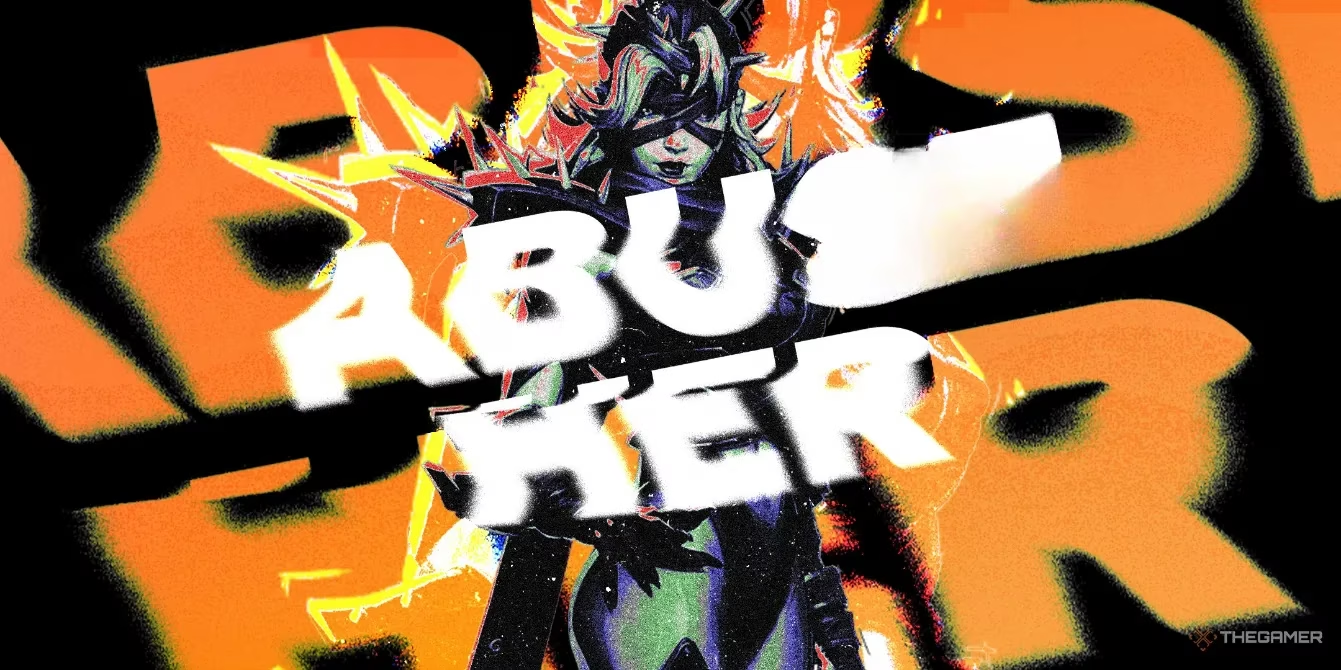
TikTok, a platform built on short-form videos and relentless scrolling, rarely showed game ads to users who weren’t already deep into gaming culture. The algorithm favored ironic hopecore edits and motivational shouts from beautiful women. So when this Marvel Rivals ad surfaced, it felt like an intrusion from a parallel universe. But the ad wasn’t just strange—it was shocking. Mobile game marketing had long relied on bait-and-switch tactics and rage-bait, but free-to-play triple-A titles usually played by different rules. Or so everyone thought.
The ad’s wording revolved around the word “abuse,” a term commonly used in hero shooter communities to mean exploiting an overpowered character or ability. Players would say, “Abuse Hela while you can before the nerf.” In that context, the ad simply urged people to play Invisible Woman as much as possible during her reign of strength. But context is a fragile thing. Paired with a barely-dressed character, a provocative pose, and a voice that sounded almost too enthusiastic, the message took on a much darker tone. The panel ruled that the ad “overly sexualised” the character and implied “you should enact violence on women,” making it unfit for TikTok’s broad audience.
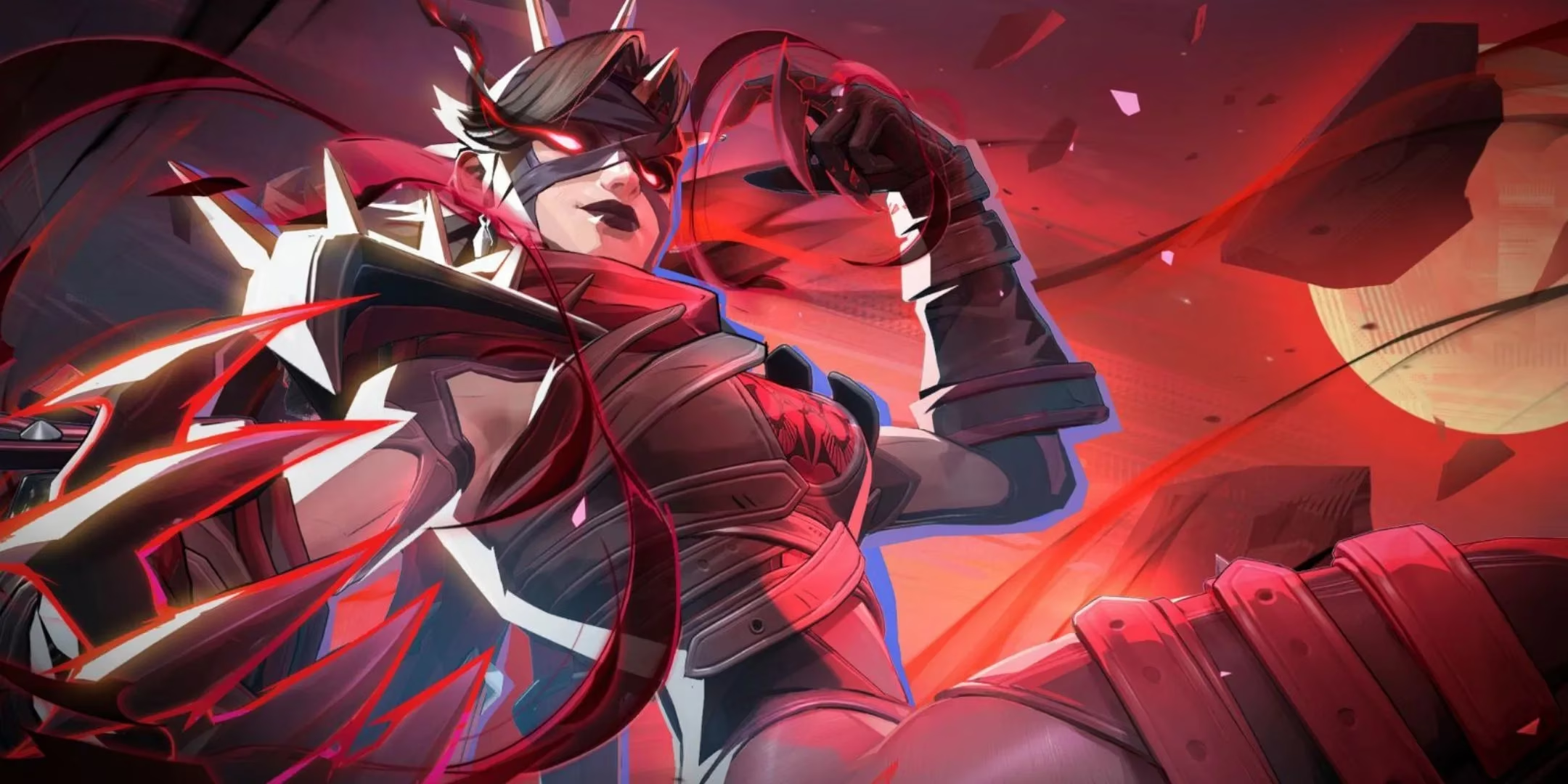
Gamers and industry watchers were quick to defend the ad. They argued that the panel simply didn’t understand gaming slang. But even among the most seasoned players, a quiet discomfort settled in. The Invisible Woman wasn’t just any character; the skin depicted was Malice, a dark persona born from Sue Storm’s traumatic miscarriage and manipulated by the villain Psycho-Man. In the comics, Malice was a manifestation of grief and rage, clad in a revealing costume that symbolised her psychological unraveling. Translating that into a skimpy in-game skin for a T-rated shooter felt… off. It wasn’t just about selling sex; it was about packaging a woman’s trauma as a cosmetic commodity.
That discomfort wasn’t isolated to a single ad. It pointed to a deeper pattern within the game itself. Marvel Rivals had a reputation for unequal design treatment. Female heroes like Invisible Woman and Dagger shared an almost identical curvy silhouette, to the point where players struggled to tell them apart in the heat of battle. Booty shots were abundant during gameplay, a deliberate choice by the developers. Meanwhile, male characters remained fully armored or modestly clothed. The disparity was glaring, and it didn’t happen by accident. Sex sells, as the old adage goes, and the game’s visual language proved it was willing to cash in.

When the Australian panel flagged the ad, the conversation shifted from “is the ad bad?” to “why was this ad even possible?” The answer lay in the foundation of the game’s art direction. By prioritising ogle-worthy female designs, the developers created an environment where a caption like “ABUSE HER” could be slapped onto a skin like Malice and pushed out without a second thought. It wasn’t just a failure of ad vetting; it was a symptom of a culture that treated female characters as eye candy first, people second.
In the months following the controversy, discussions erupted across social media. Some players demanded the removal of the Malice skin, while others defended it as a niche comic reference. The developers stayed mostly silent, save for a brief statement about “reviewing internal guidelines.” But the damage was done. The incident became a case study in how free-to-play games walk a tightrope between monetisation and messaging. Ads that might have been innocuous for a differently designed character became loaded with misogynistic undertones because the game itself had set the stage.
Fast forward to 2026, and the gaming landscape has shifted in subtle ways. More studios now employ sensitivity readers and diverse art teams. Marvel Rivals has introduced a handful of new, less sexualised female skins, though the old ones remain popular among players. The TikTok ad is still occasionally rediscovered and mocked, a relic of a time when companies thought they could get away with such careless marketing. But the core lesson endures: when a game builds its identity around the male gaze, even the smallest ad can blow up into a storm. The Marvel Rivals ad wasn’t just a misstep; it was a mirror reflecting an industry’s ongoing struggle with respect.
Expert commentary is drawn from PEGI, underscoring how marketing language and visuals can shift a game’s perceived suitability when presented to broad, mixed-age audiences on platforms like TikTok. In controversies like the “ABUSE HER” Marvel Rivals ad, the core issue isn’t just community slang versus outsider interpretation—it’s how sexualised character presentation and aggressive phrasing can amplify harmful readings, highlighting why clearer ad safeguards and audience-targeting practices matter alongside a game’s intended rating context.