The ever-shifting battlefield of Marvel Rivals has once again been recalibrated. Back in the early days of Season 1.5, NetEase pushed out a mid-season balance patch that continues to shape hero viability well into 2026. While the competitive landscape has evolved, the ripple effects of those March adjustments are still felt every time a duelist locks in Iron Man or The Human Torch. The patch aimed to tone down an overperforming armored Avenger while giving a fiery newcomer the extra kick he deserved, and it delivered precisely that.
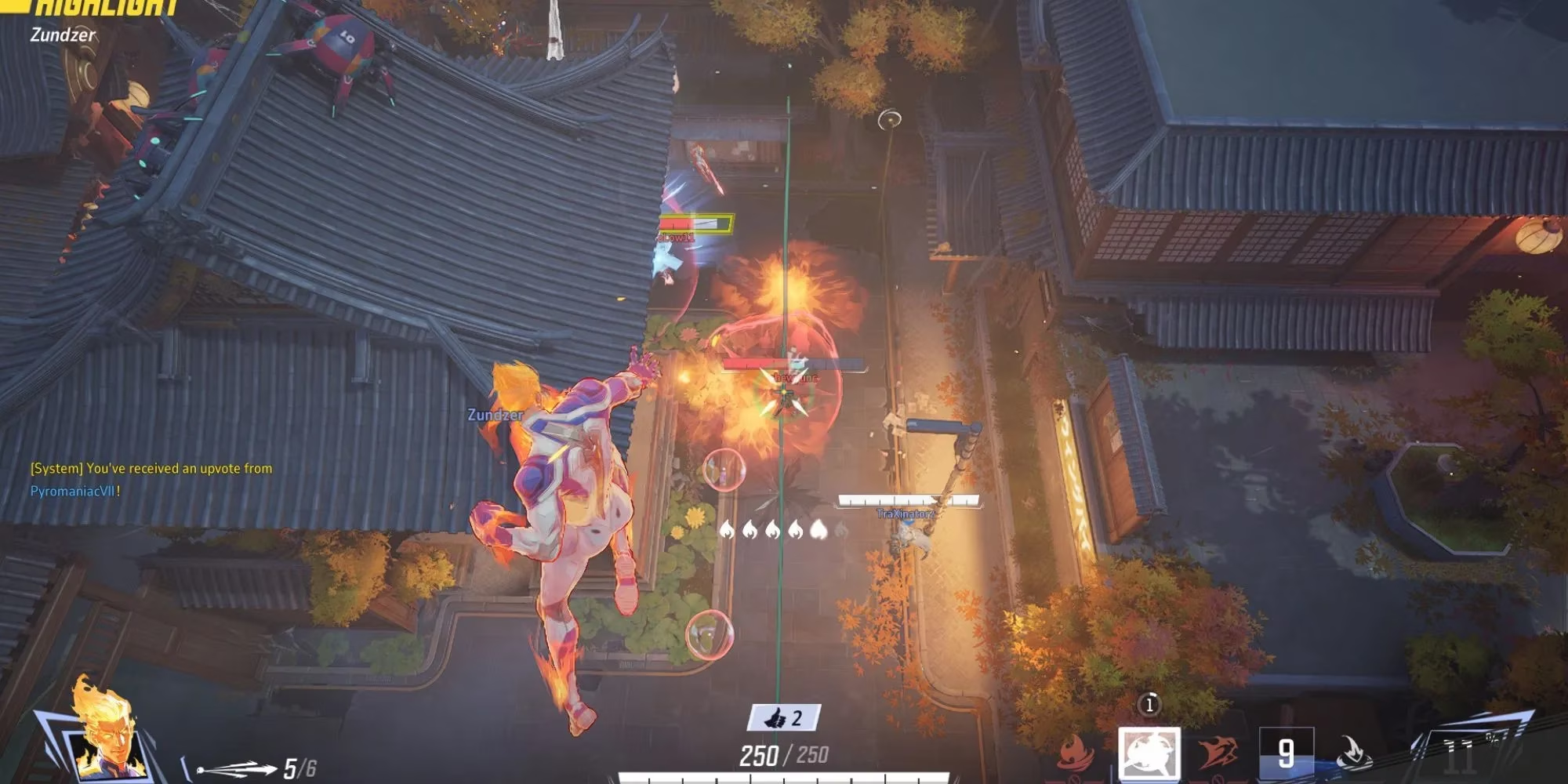
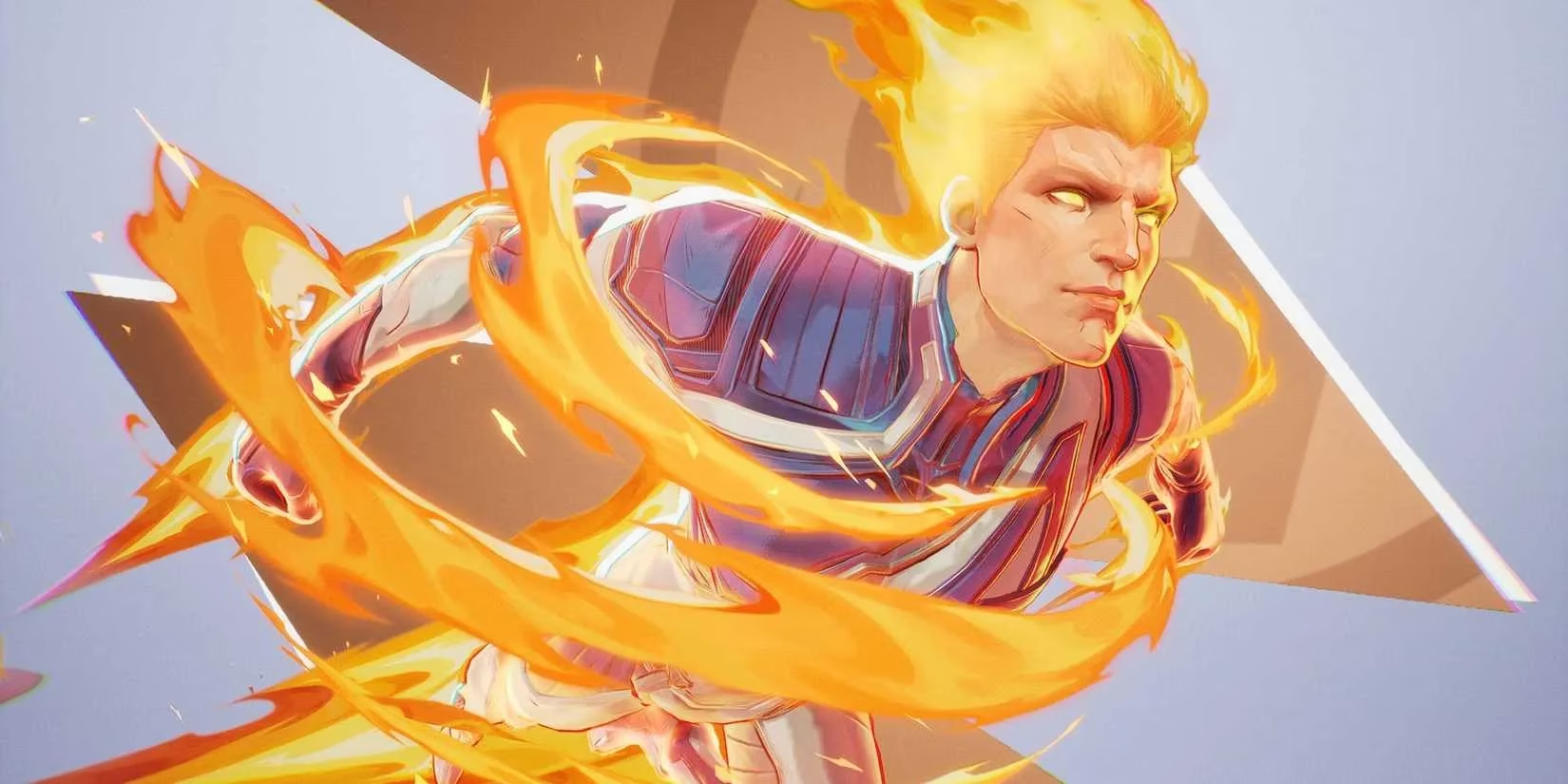
At the center of the storm was The Human Torch, whose initial launch left players wanting more solo carry potential. His primary attack, the Fire Cluster, felt sluggish despite its flashy visuals. The developers responded by cranking up both its speed and saturation. The projectile velocity jumped from 120 meters per second to a blazing 150 m/s, making it noticeably harder for enemies to sidestep the incoming heat. Additionally, the number of projectiles per volley increased from 12 to 14, effectively boosting his raw damage output without altering the fire rate. These tweaks transformed Johnny Storm from a zoning nuisance into a legitimate mid-range threat capable of melting overconfident frontliners.
The enhancements didn't stop at his basic kit. The Human Torch’s ultimate ability, Supernova, received a substantial overhaul that nudged his playstyle toward decisive all-ins. The energy cost rose from 3400 to 4000, meaning he would need to be more deliberate about when to commit his infernal finale. In exchange, the activation wave damage was upped from 70 to 80, and—more crucially—the Flame Tornado damage-over-time effect climbed from 100 per second to a searing 120 per second. The result? A Supernova that, when placed correctly, could singlehandedly wipe squads huddled on a capture point. The higher cost demanded better resource management, but the payoff became absolutely terrifying.
On the opposite end of the tuning spectrum stood Iron Man, whose Repulsor Blasts had become a point of frustration across all ranks. Many felt the hero received an unwarranted spike in power from a previous Unibeam buff, making his mid-range presence oppressive in skirmishes. The balance team addressed this by shaving off a significant chunk of direct hit damage across all Repulsor Blast stages. Stage 1 and 2 direct impacts dropped from 55 to 40, while stage 3 fell from 65 to 50. Even his Armor Overdrive mode saw the direct hit value reduced from 55 to 50. At first glance, these numbers looked brutal. However, a closer inspection revealed a clever redistribution rather than a pure gutting: spell field damage (the splash radius effect) saw considerable increases. Stage 1/2 splash rose from 35 to 50, stage 3 from 40 to 60, and Overdrive splash from 55 to 65.
What did this mean in practice? Iron Man could no longer two-shot squishy targets with pinpoint direct hits unless he landed every pellet perfectly. Instead, his role shifted toward consistent area pressure. Players now had to aim for feet or walls to maximize the splash potential, rewarding smart positioning over raw flick accuracy. The community's initial outcry eventually mellowed as top-tier players demonstrated how the iron Avenger could still dominate by leveraging the larger explosion radii to disrupt bunched-up formations. Essentially, Iron Man’s skill ceiling evolved, punishing lone-wolf sharpshooters who relied solely on direct contact while empowering tacticians who understood map geometry.
The patch also didn’t forget the support line. Cloak & Dagger received another round of adjustments to their healing capabilities, continuing NetEase's habit of frequently fine-tuning the duality duo. While exact numbers were less flashy than the duelist changes, the improvements made them more versatile across various team compositions. Whether a team needed sustained poke healing or burst saves during a dive, Cloak & Dagger became a comfortable pick for flex players. This ongoing tweaking highlighted the developers’ commitment to ensuring that the strategist role remained dynamic rather than stale, especially as new heroes entered the roster.
By 2026, analysts look back at this specific patch as a turning point for the meta. The Human Torch’s ascent into the S-tier conversation was directly tied to the Fire Cluster and Supernova changes, opening up aggressive dive combinations with aerial partners like Storm. Meanwhile, Iron Man’s rebalance carved out a unique mid-range niche that separated him from pure hitscan or pure projectile duelists. The patch also came just before the eventual announcement of Season 2, which introduced a fresh wave of characters that would build upon the foundational balance established here.
Speaking of the broader Marvel Rivals ecosystem, the time around the patch also brought some light-hearted developer banter. When players complained about being callously repositioned off ledges by Jeff the Landshark, the character’s designer famously quipped that it was a simple matter of skill improvement—a blunt "git gud" message that became a running joke within the community. Moreover, NetEase openly confirmed intentions for crossovers with other entertainment properties, a promise that later materialized in surprise collaborations that kept the game culturally relevant far beyond a typical hero shooter lifespan.
Ultimately, the Season 1.5 mid-season patch stands as a testament to responsive game design. By reinforcing The Human Torch’s identity as a high-risk, high-reward avenger and repositioning Iron Man’s damage profile to reward smart area denial, NetEase kept the hero roster feeling fresh without resorting to homogenization. For current players diving back into 2026, understanding these legacy changes provides crucial context for why certain matchups feel the way they do—and why that flaming meteor descending from the sky should never be underestimated.