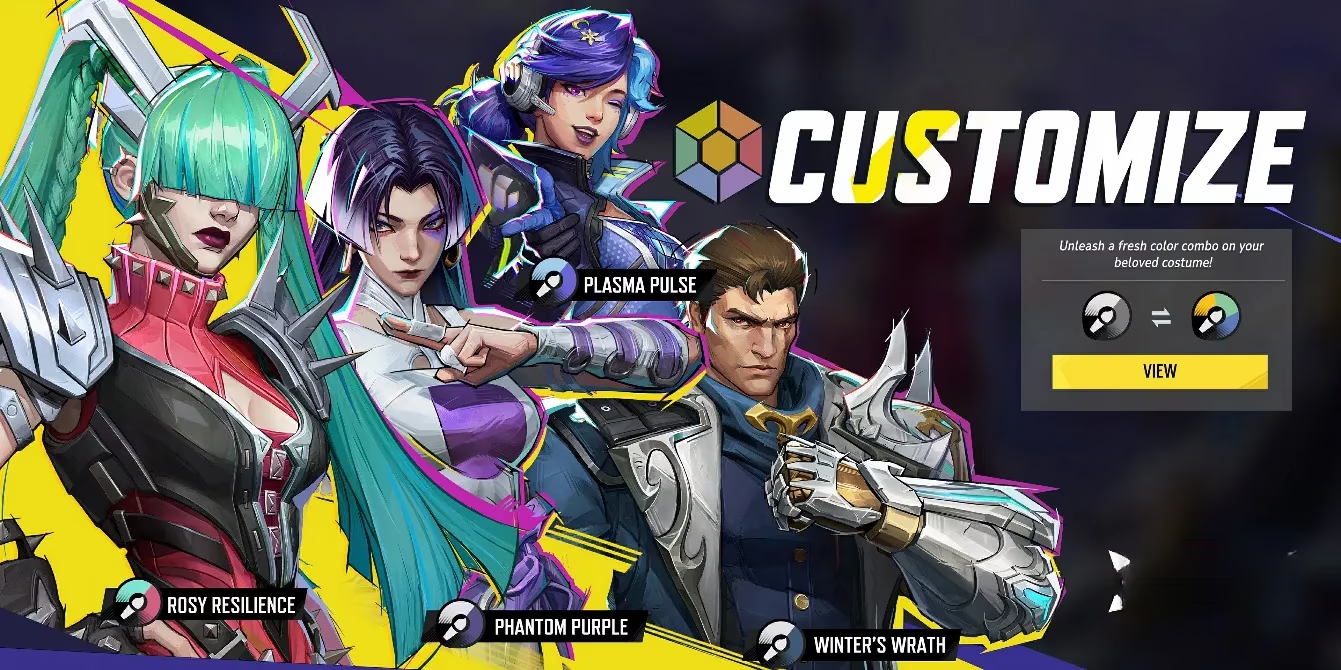
The introduction of a new color customization feature in Marvel Rivals has ignited significant controversy within its player community. While the April 2025 update promised enhanced personalization for purchasable character skins, the implementation and associated costs have left many fans feeling frustrated and disappointed. The core issue lies not in the feature's existence, but in its monetization strategy, which many perceive as excessively greedy, especially for a game that had previously been praised for its fair free-to-play model. How did a game celebrated for its accessibility stumble into a monetization pitfall that has become all too common in the genre?
The Cost of a New Coat of Paint
According to official announcements from the Marvel Rivals development team, the new skin recolor system operates on a separate, premium currency called Unstable Molecules. To unlock the ability to change the colors of a single eligible skin, players must purchase a Color Customization Unlock for 600 Unstable Molecules. The financial translation of this cost is what has caused the uproar. Currently, Unstable Molecules are acquired by exchanging another in-game currency, Lattice. The exchange rate is 600 Lattice for 600 Unstable Molecules, which translates to approximately $6 USD. This is a direct, additional charge on top of the price of the base skin itself, which is purchased with a different currency called Units.
This multi-currency system has been a point of confusion and criticism. Players must navigate:
-
Units: For purchasing base skins and some cosmetics.
-
Lattice: Primarily used for the seasonal Battle Pass, convertible to Units.
-
Unstable Molecules: The new, dedicated currency for recolor unlocks.
The immediate reaction from the community was one of disbelief. On platforms like Reddit, players voiced their concerns, arguing that paying for a palette swap after already investing in a premium skin feels like a double charge. User G-gianluk's thread became a hub for this discussion, with many echoing the sentiment that such a feature should either be included with the skin purchase or offered at a minimal, token cost.
A Familiar Frustration for Hero-Shooter Fans
Marvel Rivals is, unfortunately, not charting new territory with this practice. The game has seemingly fallen into a monetization pattern established by other major titles in the free-to-play hero-shooter space. This move draws direct and unfavorable comparisons to games like Overwatch 2 and Apex Legends, both of which have faced their own player backlash for charging premium prices for simple skin recolors.
For many players, this is particularly disheartening because Marvel Rivals had positioned itself as a more player-friendly alternative. Its launch was bolstered by a wave of Overwatch veterans seeking refuge from controversial changes in Blizzard's title. These players were attracted to NetEase's promise that all gameplay-affecting content—characters and maps—would remain free. The monetization was to be focused solely on cosmetics, a model that was initially well-received. The introduction of a costly recolor system feels like a betrayal of that initial goodwill, making the game's economy resemble the very systems some players sought to escape.
Limited Scope and Future Promises
It's important to note the current limitations of the system. As of the 2025 update, only a select few base skins have the recolor option available. The developers have stated that more skins will be added to this program over time. Furthermore, they have announced plans to introduce more ways to earn Unstable Molecules starting with Season 3, expected in the summer of 2025. This season is also slated to debut a new strategy for releasing characters.
This future promise is a double-edged sword. On one hand, it suggests the developers are listening to feedback and plan to integrate the currency into reward systems, potentially through the Battle Pass or challenge completions. On the other hand, it leaves the current implementation feeling like an expensive test phase, where early adopters are paying a premium for a feature that may become more accessible later. Will players be willing to pay $6 per recolor now if they believe they might earn them for free in a few months?
The Bigger Picture: Monetization in Free-to-Play Games
The Marvel Rivals recolor controversy highlights a persistent tension in live-service gaming. Developers need sustainable revenue streams to support ongoing content updates, servers, and development. However, players have a clear threshold for what they consider fair value. A $6 charge for changing a skin's colors, after a separate purchase for the skin itself, crosses that threshold for a significant portion of the audience.
Compared to other free-to-play games, Marvel Rivals still offers generous ways to earn cosmetic currency through gameplay. The concern is that adding yet another layer of paid currency fragments the economy and creates a perception of nickel-and-diming. The community's strong reaction is a clear signal that players value transparency and fairness. They accepted paying for cosmetics, but they expect those cosmetics to be complete experiences, not gateways to further microtransactions.
Looking Ahead to 2026
As Marvel Rivals moves beyond its second year and deeper into 2026, the handling of the Unstable Molecules system will be a critical test for NetEase. The player base has shown it will vocally reject monetization it deems unfair. The success of Season 3's promised additional earning methods will be crucial in mending community relations. If Unstable Molecules become reasonably earnable through regular play, the initial backlash may be remembered as a stumble. If they remain a primarily premium currency, it could cement a shift in the game's reputation.
The core gameplay of Marvel Rivals—the fast-paced, superhero team battles—remains strong and compelling. The question is whether cosmetic monetization decisions will overshadow that solid foundation. For a game that attracted players by offering a fresh start, maintaining trust is paramount. The recolor feature, intended to increase player agency and customization, has instead sparked a debate about value and publisher intent. Only time, and the developers' subsequent actions, will tell if this is a temporary misstep or a sign of a changing philosophy for Marvel Rivals.