The sprawling battlegrounds of Marvel Rivals had never felt so alive. Since its explosive launch in late 2024, the game had become a pulsing playground where heroes and villains clashed daily, their iconic banter echoing through the streets of Tokyo 2099 and the ruins of Asgard. But as Season 3 rolled into 2026, something new crackled in the air—a whisper of unfamiliar footsteps, a hint of strange powers on the horizon. The developers at NetEase Games weren’t just polishing the next batch of heroes. They were quietly unlocking doors to realities far beyond the Marvel Universe, preparing for crossovers that would make a talking raccoon blush. The game, it seemed, was getting ready to throw the wildest party in gaming history, and everyone was invited.
The Multiverse Beckons 🌌
Behind closed doors—and during a certain earnings call back in early 2025—NetEase executives had spelled out their dream: bring outside franchises into Marvel Rivals to supercharge its already rocket-fueled growth. They’d watched Fortnite do it for years, pulling in everyone from Naruto to Ariana Grande, and thought, “Hey, we’ve got the entire Marvel sandbox. Why not play with some other kids’ toys too?” The plan was equal parts ambition and common sense. After all, nobody ever said no to more fun. Legal hurdles aside—and boy, were there hurdles—the idea felt like dropping a cosmic cube into a room full of creative geniuses. It was going to explode in the best possible way.
“Let’s be real,” a lead designer might have chuckled during a late-night brainstorming session, “if we can make a tree and a merc with a mouth work as playable characters, we can definitely figure out how to dress up Luna Snow like a Fortnite default dance master.” That kind of can-do attitude rippled through the studio. The mission was clear: turn Marvel Rivals into the nexus of pop culture, a place where Spider-Man could web-sling alongside a hero from a completely different dimension without anyone batting an eye.
Who’s on the Guest List? 🦸♂️
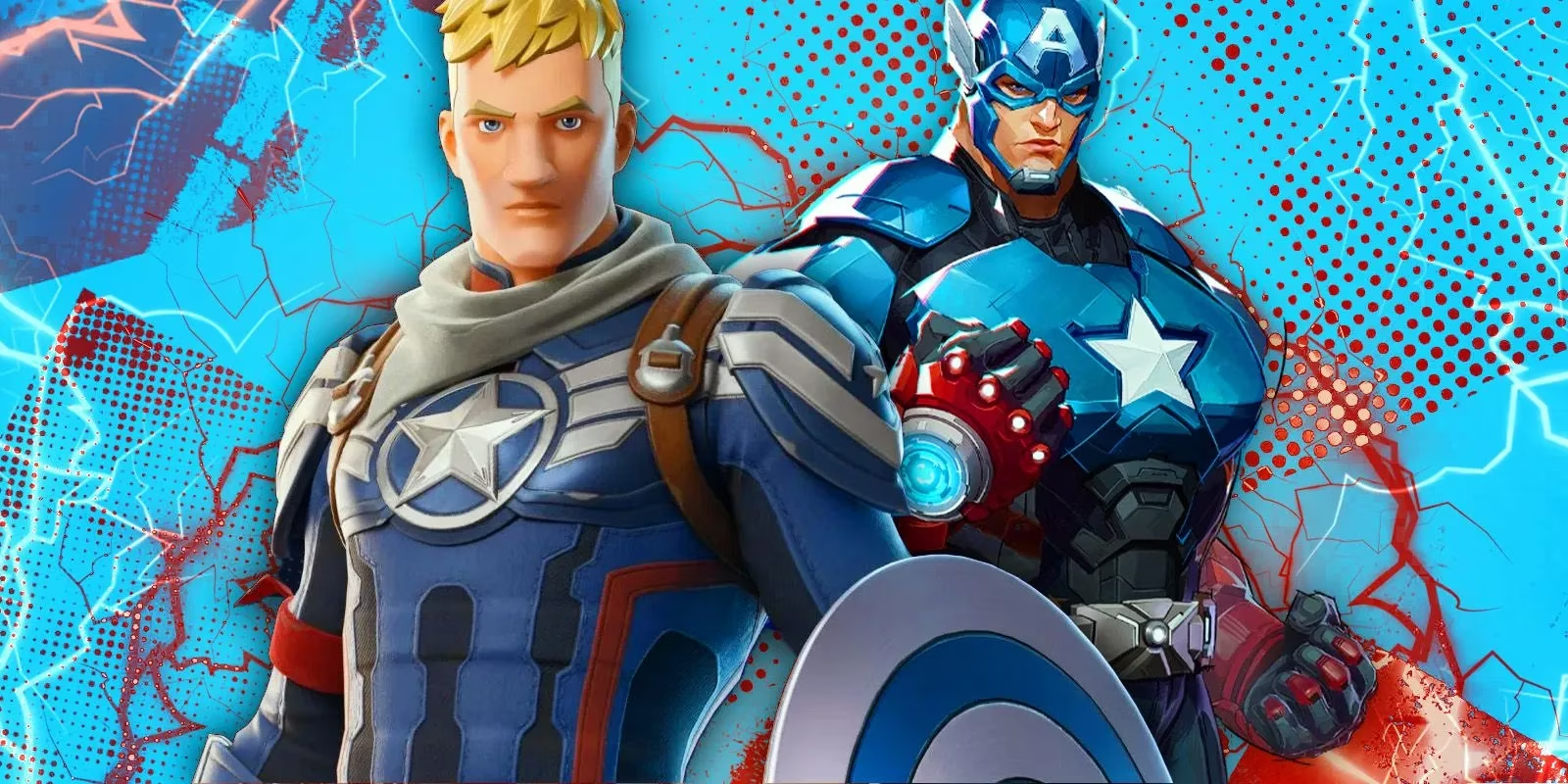
Picking the right partners wasn’t as easy as throwing darts at a board of famous IPs. The relationships, the aesthetics—they all had to click. Fortnite was the obvious first dance partner. The two had already flirted, with Marvel characters joining Epic’s battle royale, so a reverse invitation felt natural. Imagine a Captain Jones skin for Captain America, a Fishpool variant for Deadpool who—according to those ever-reliable leaks—was already secretly gearing up to join the roster. Who wouldn’t want to see Deadpool with a fish tail, cracking jokes about sushi? “It’s so absurd, it’s perfect,” fans would say, and they’d be right.
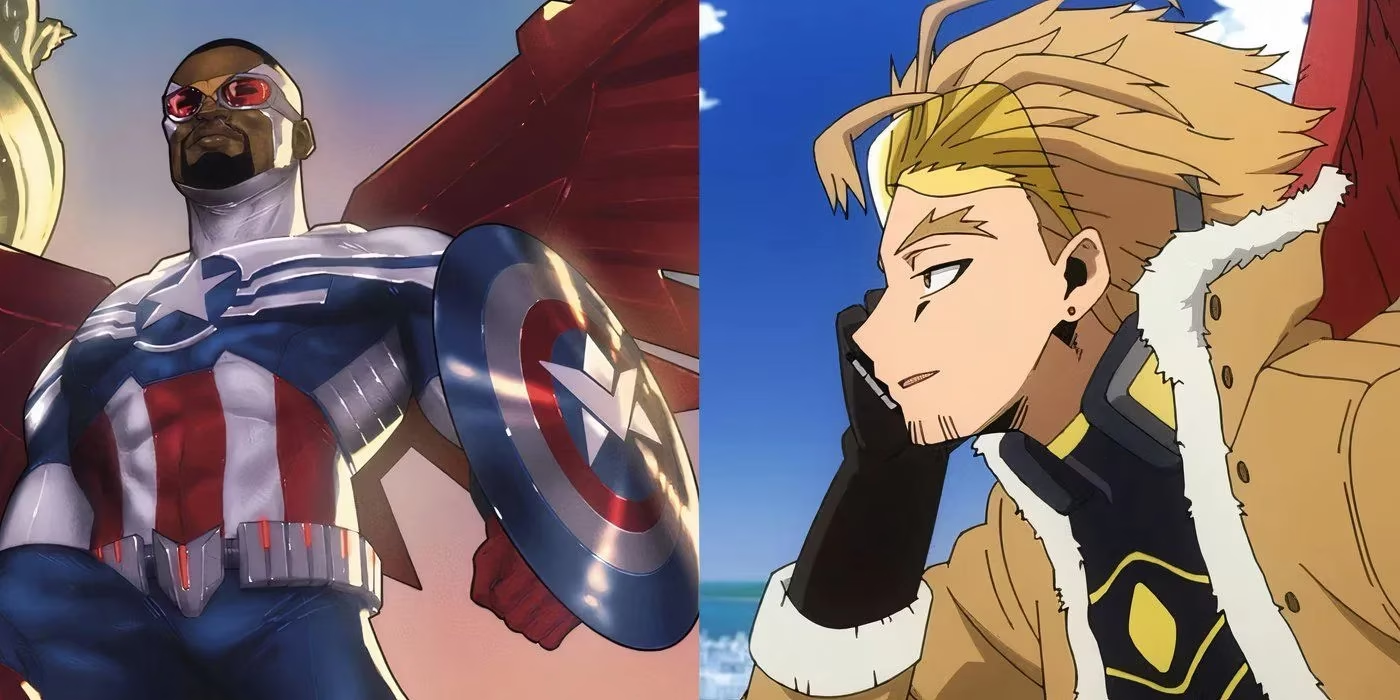
Then there was My Hero Academia. The anime had already teamed up with Marvel in comic form, and its Quirk-filled heroes meshed surprisingly well with the super-soldier serum crowd. Picture a Midoriya-inspired Iron Man suit or a Uravity-style Zero Gravity field for Storm. The crossover practically wrote itself.
But the real jaw-dropper—the one that kept popping up in community wishlists—was DC Comics. Yes, the two comic giants had spent decades as friendly rivals, but they’d also joined forces in crossovers like JLA/Avengers. Bringing a Dark Knight or a Man of Steel into Marvel Rivals would be like serving chocolate in peanut butter: weird combo, but once you taste it, you never go back. Of course, NetEase could also knock on the door of fellow Chinese titan Tencent, opening a path to League of Legends or Valorant skins. The possibilities felt endless, like a multiverse of wish fulfillment.
How the Magic Happens ✨
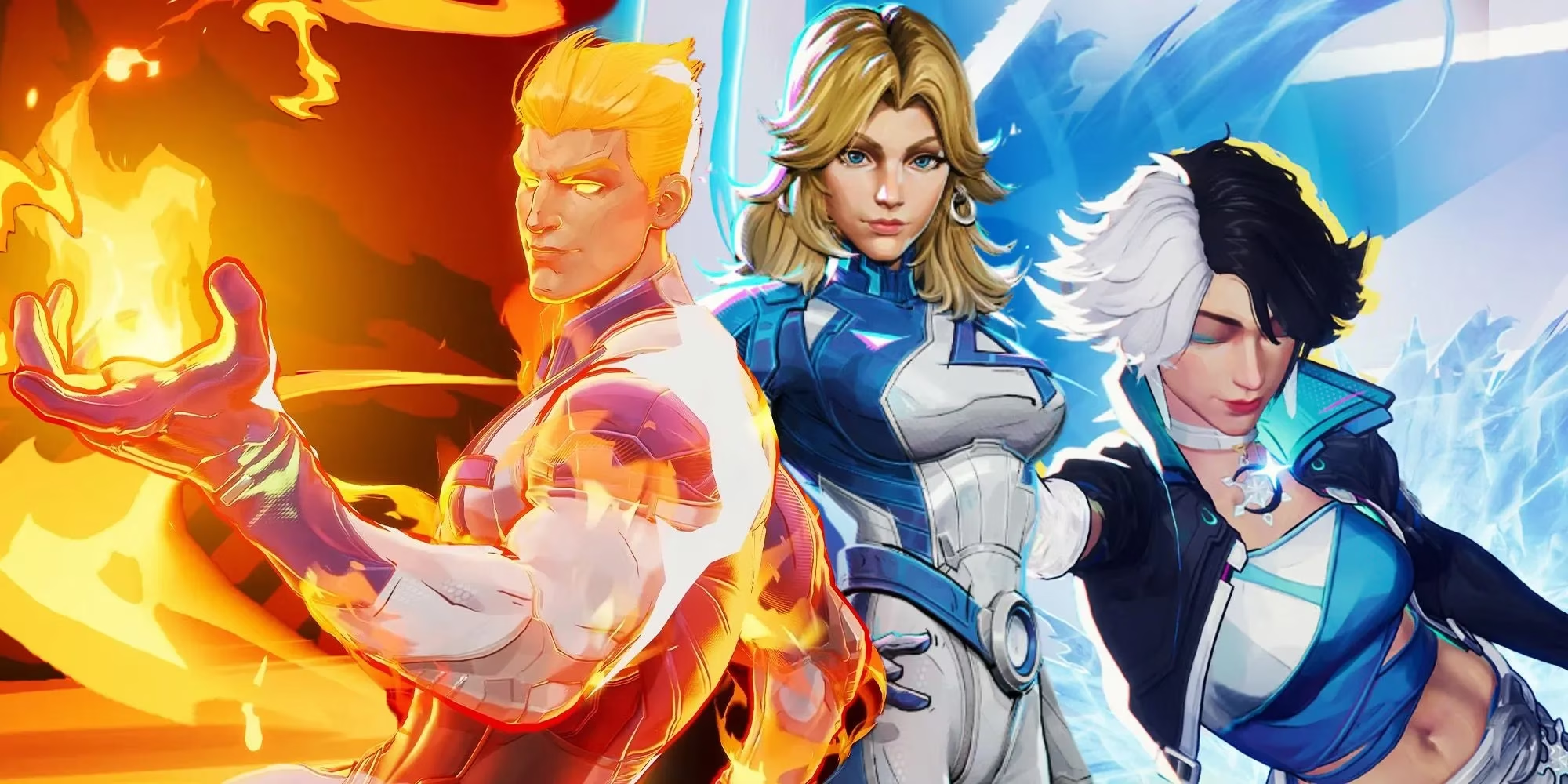
The actual mechanics of these crossovers fell into two buckets. The first was bite-sized but oh-so-tasty: limited-edition cosmetic packs. Sneak in three to six skins inspired by another franchise, slap a reasonable price tag on them, and watch players go wild. Rivals had already proven it knew how to craft jaw-dropping outfits—just peek at the Winter Celebration and Lunar New Year collections—so dressing up Black Widow as an anime schoolgirl or Thor as a Lumberjack of Legends wouldn’t be a stretch.
The second bucket was the full-blown event. Think of the Lunar New Year’s rocket-red envelope hunts but dialed up to eleven. A My Hero Academia collaboration could introduce a limited-time mode where every hero temporarily gained a quirk-like twist: Hulk’s ground pound sending out shockwaves of green energy, or Namor suddenly able to suspend enemies in floating water bubbles. These events weren’t just about selling skins—they were about creating stories, memories, and the kind of social media buzz that made people who’d never touched the game suddenly download it just to see what the fuss was about.
“At the end of the day, it’s the cosmetics that keep the lights on,” a monetization designer might admit with a knowing grin. But cooked right, those cosmetics would feel less like cash grabs and more like love letters to both fanbases. And Rivals had shown time and again that it knew how to write those letters.
The Road to 2026 and Beyond 🚀
As 2026 unfolded, the fruits of those early planning seeds began to ripen. Teasers flickered across social media: a glowing green symbol that looked suspiciously like a lantern corps emblem, a rift in the sky whispering with anime soundtrack snippets. The community held its breath. Dataminers unearthed strings of code referencing “Event_Collab_01” and “Skin_Cross_MHA.” Every patch note became a scavenger hunt.
The truth was, Marvel Rivals had already won the player’s trust. It delivered meaty seasonal content, generous free rewards, and heroes that felt alive. Adding crossovers now was like pouring a rare spice into an already delicious stew—it would elevate everything without drowning out the core flavor. The game wasn’t slowing down. It was accelerating into a new era where the question wasn’t “Will there be a crossover?” but “Which universe drops in next?”
And somewhere, in a digital throne room, Doctor Doom probably rolled his eyes. Even he couldn’t stop the multiverse from crashing through the front door. After all, when you’ve got a game this good, the only way to go is sideways—into infinite possibility.