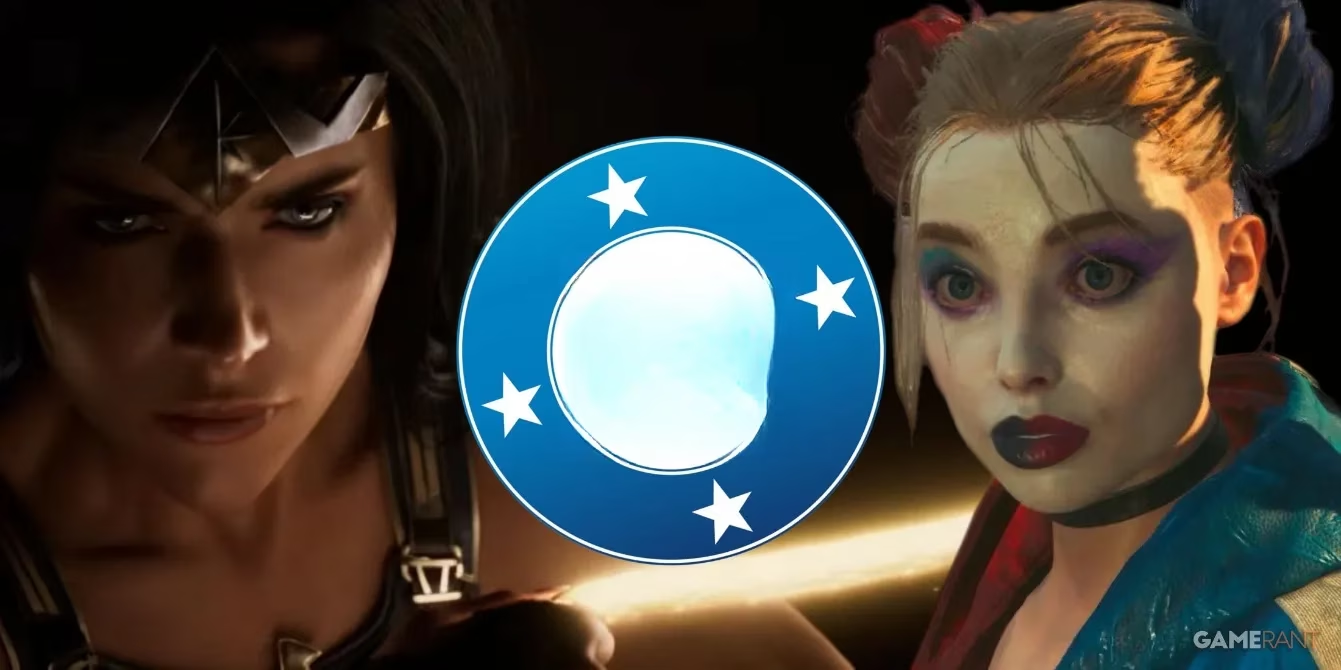
The landscape for DC video game adaptations has grown increasingly challenging. Following the golden era defined by the critically acclaimed Arkham series, recent years have proven to be a period of significant struggle. The high bar set by Batman's adventures has been difficult to surpass, and the past few years, extending into 2025, have delivered some of the toughest blows the brand has ever faced. The launch of Suicide Squad: Kill the Justice League was met with a polarized and largely negative reception, a situation compounded by the tragic shuttering of developer Monolith and the subsequent cancellation of its promising Wonder Woman project. To navigate out of this slump, DC may find its most viable path forward lies in strategic observation and adaptation of successful models from its competitor, Marvel.
The Core Issue: Narrative Ambition vs. Live-Service Execution 🎭
One of the fundamental problems with Suicide Squad: Kill the Justice League was its identity crisis. At its heart, it was a narrative-driven experience set within the beloved Arkhamverse, yet it was awkwardly grafted with live-service elements that felt like an obligatory, underdeveloped afterthought. Players craving a compelling continuation of the Arkham saga found themselves navigating systems built around microtransactions and repetitive grinding, with post-launch content that was too sparse and insubstantial to compete in the crowded live-service arena. The desire was for epic storytelling, not a hollow gameplay loop.
The Marvel Rivals Blueprint: A Lesson in Focus 🧠
While Rocksteady's foray into live-service may have stumbled, the model itself isn't inherently flawed—it's all about execution. Enter Marvel Rivals, which has demonstrated a masterful approach. This title has quickly become a fan-favorite by prioritizing robust, action-packed gameplay and a steady stream of engaging content. While it possesses its own lore, the narrative takes a backseat to delivering a polished, competitive, and consistently updated player-versus-player experience. Its success formula is clear:
-
Gameplay-First Philosophy: Matches are fast, strategic, and built on character abilities.
-
Robust Content Pipeline: Frequent updates, new heroes, maps, and modes keep the community engaged.
-
Stylized, Recognizable Characters: A vibrant art style that makes heroes and villains pop on screen.
Imagining a DC Rivals: The Perfect Counterpart? ⚡
A DC-inspired take on this formula is not just possible; it could be a powerhouse. Imagine stylized, dynamic versions of the Justice League and their rogues' gallery clashing in intense, objective-based matches.
Potential Hero/Villain Roster & Roles:
| Character | Role (Example) | Key Ability Concept |
|---|---|---|
| Batman | Strategist/Assassin | Deployable gadgets, stealth takedowns |
| Superman | Tank/Bruiser | Heat vision, super strength charges |
| Wonder Woman | Brawler/Support | Lasso of Truth (crowd control), bracelets defense |
| The Flash | Speedster/Flanker | Speed blitz, vortex creation |
| Harley Quinn | Agile Damage | Chaotic explosives, acrobatic moves |
| The Joker | Controller/Debuffer | Toxic gas, chaotic mind games |
This approach would allow DC to finally deliver the live-service hit it needs—a game focused on fun, lasting multiplayer engagement with its iconic characters, rather than forcing a narrative epic into an incompatible framework.
The Road Ahead: Balancing Originality & Smart Adaptation 🛣️
Recent meetings between DC Studios head James Gunn and developers like Rocksteady and NetherRealm Studios are promising signs, hinting at a potential return to the single-player, narrative-driven experiences that built DC's gaming legacy. That long-term vision is ideal. However, in the immediate term, the brand needs a decisive win to rebuild momentum and fan goodwill.
Adopting a Marvel Rivals-inspired model offers a strategic middle ground:
-
Quick Market Penetration: Capitalizes on a proven, popular genre.
-
Character Celebration: Puts the vast DC pantheon front and center in a fun, accessible way.
-
Foundation for the Future: A successful live-service title can fund and pave the way for more ambitious, original single-player projects down the line.
The cancellation of Wonder Woman and the short lifecycle of Suicide Squad were heavy blows, but they also provide clear lessons. While a triumphant return to original, story-focused games remains the ultimate goal, embracing a smart, focused adaptation of a competitor's successful formula could be the thrilling, fun-filled catalyst DC needs to stage its gaming comeback. The bell hasn't tolled for the House of El and the Bat just yet—it might be time for a new game plan. 🦇✨