The shimmering, chaotic spectacle of the Hellfire Gala continues, but beneath the neon glow and the thunder of super-powered clashes, a quieter, more insidious war was being waged. It wasn't the grand battle between heroes and villains that defined our arenas, but a slow corrosion from within. I have felt it—the sudden, gut-wrenching inertia when a teammate, shrouded in the anonymity of a fresh account, turns the tide not with skill, but with deliberate malice. Or the hollow silence that follows when a comrade, displeased with the opening skirmish, simply stops moving, becoming a statue of spite. The Gala's music couldn't mask the discord. Our victories felt pyrrhic, our defeats, unjust. Was this the competitive crucible we had signed up for, or had the arena become a stage for the petulant and the predatory?
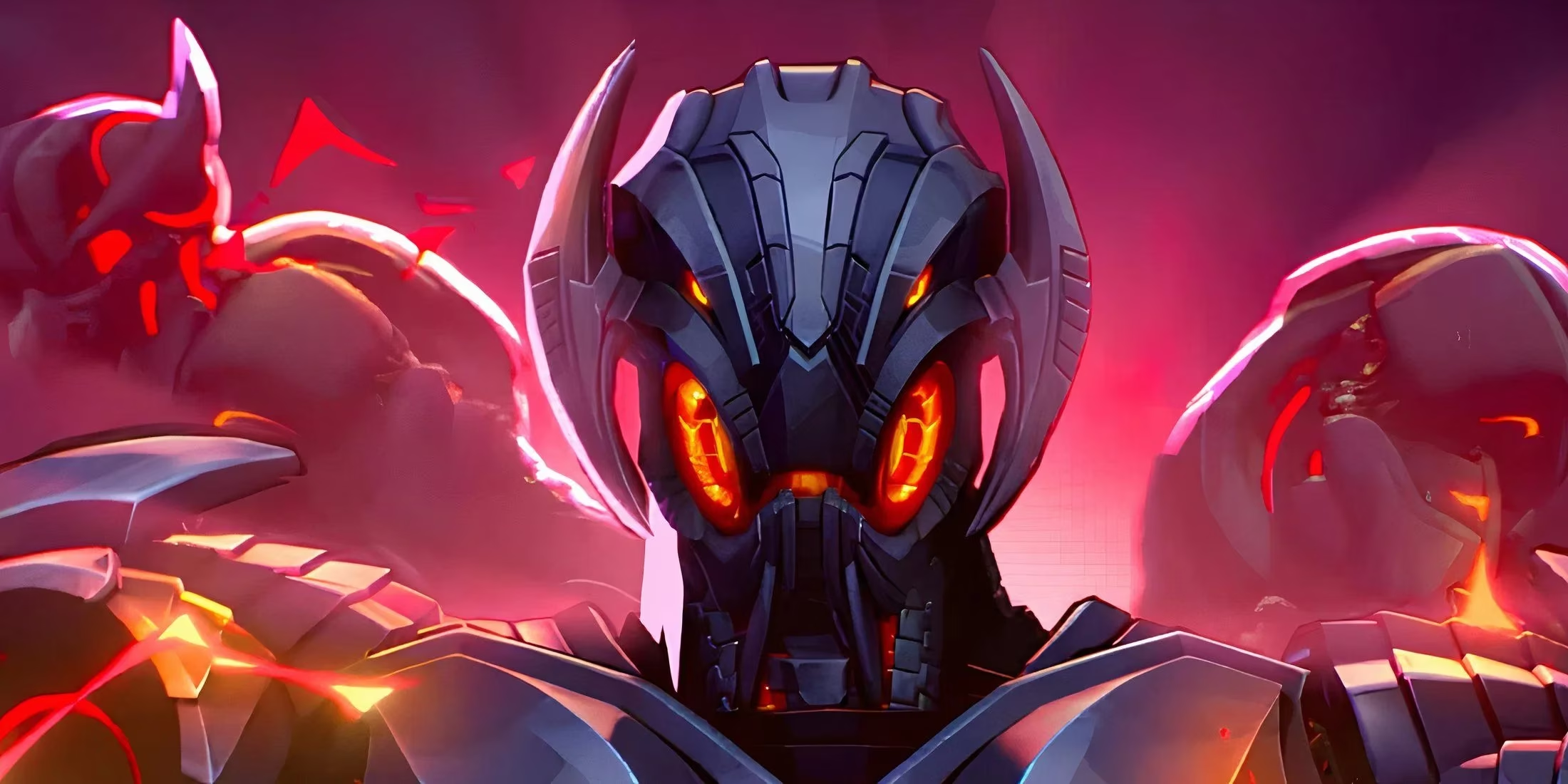
The arrival of Ultron, a new mechanical maestro of support, promised a new era of strategic synergy. Yet, even his cold, logical intelligence couldn't calculate for human unpredictability—or rather, human spite. For weeks, the community's cry was a unified lament. We weren't being outplayed by superior tactics; we were being undone by smurfs and throwers. The former, seasoned veterans masquerading in novice armor, descended upon matches like wolves among sheep, their very presence warping the fair fight into a foregone conclusion. The latter, those who would rather see their own team burn than play from behind, turned our coordinated pushes into tragic farces. NetEase had tried to soften the blow, lessening the rank penalty for losses in these tainted matches, but it was a bandage on a bullet wound. The sting of the experience remained. The question hung in the air, charged like Storm's lightning: must we simply endure the ruin of our recreation?
Then, with the late June update, a new protocol was activated. A subtle but profound shift in the very fabric of our matchmade realities. The surrender system—once a rigid, all-or-nothing democratic process—was rewritten. Before, if a single soul clung to a lost cause or, more cynically, wished to prolong the suffering, five players were held hostage. Now, the threshold for mercy became dynamic, scaling with our remaining numbers. A team of four, battered and missing a member, needs only three voices raised in unison to call for an end. Three out of four. A simple majority, a path to dignity. It is an elegant, almost poetic solution: as our ranks thin, so too does the barrier to our escape.
But with every solution, a new question blooms. Does this lowered bar, this easier exit, become a trap door beneath our own competitive spirit? Will the first lost team fight now trigger a cascade of surrender votes, a premature retreat before the true tide of battle can even be felt? I have seen teams rally from the brink of oblivion; I have been part of those miraculous, pulse-pounding turnarounds. Will we now rob ourselves of those moments of glory for the sake of avoiding a temporary setback on a digital ladder? The balance is delicate, as fragile as a snowflake in a battlefield. The system must be a shield against toxicity, not a crutch for the faint of heart. The hope, of course, is that by removing the audience—by allowing the aggrieved to simply leave the stage—we drain the motivation of the trolls and the smurfs themselves. If their goal is to provoke and dominate, what is the point if their captives can simply vanish?
Only time will tell the full story of this change. As Season 2's Hellfire Gala begins its final crescendo, we, the players, are the test subjects in this grand experiment. We will learn in the coming weeks if this new surrender vote:
-
Truly liberates us from unwinnable, toxic scenarios.
-
Inadvertently encourages a quicker defeatist mentality.
-
Successfully discourages the bad actors by reducing their disruptive impact.
The data will be in the matches, in the felt experience of the arena. For now, as I queue for my next battle in 2026, there is a new feeling—a slender thread of agency. The power to say "no more" is now more accessible. It is not a weapon, but a key. And perhaps that is what we needed most: not just new heroes like Ultron or Emma Frost to fight for us, but the means to preserve the sanctity of the fight itself. As the whispers of Season 3 begin to stir on the horizon, one wonders what other quality-of-life evolutions await. Will the future hold not just new battles, but better ones?